Showing posts with label Ideas. Show all posts

Sunday, November 19, 2023

Reclaiming Masculinity: A Reflection on International Men's Day

Today (November 19th) is International Men's Day, a day that goes completely unnoticed in the media and society as a whole. Contrast it with International Women's Day on March 8th, which is widely recognized and celebrated around the world to honor women's accomplishments and contributions. Every year on that day, my social media feeds get inundated with posts commemorating women, bringing attention to the challenges they face and applauding their strength and accomplishments.  

I have no objections to the recognition given to women. And why would I? I have numerous cherished female loved ones in my life—from my mother, sisters, and nieces to teachers, colleagues, and close friends—all of whom contribute immensely to my life as well as others. They genuinely deserve every bit of attention they receive on that day and beyond.

However, the stark contrast between the two days begs the question: Why is there a lack of recognition and celebration for men on International Men's Day? Do men not merit recognition and gratitude for their contributions to society?

Bias Against Masculinity

In our current cultural climate, any conversations about the positive impacts of men, especially if initiated by men, have become taboo. The term "toxic masculinity," coined by some radical feminists, has emerged as a prominent part of the discourse on men, which equates masculinity with toxicity. Imagine the uproar if I used the term "toxic femininity"—it would undoubtedly be met with accusations of misogyny. This dichotomy in societal attitudes towards gender reveals a clear bias against men and genuine masculinity.

Before radical feminists and woke activists created a horribly skewed view of gender dynamics, masculinity was considered a highly valued attribute. Throughout history, and even on the evolutionary scale, the more masculine a man was, the more respect he had within the tribe and society. 
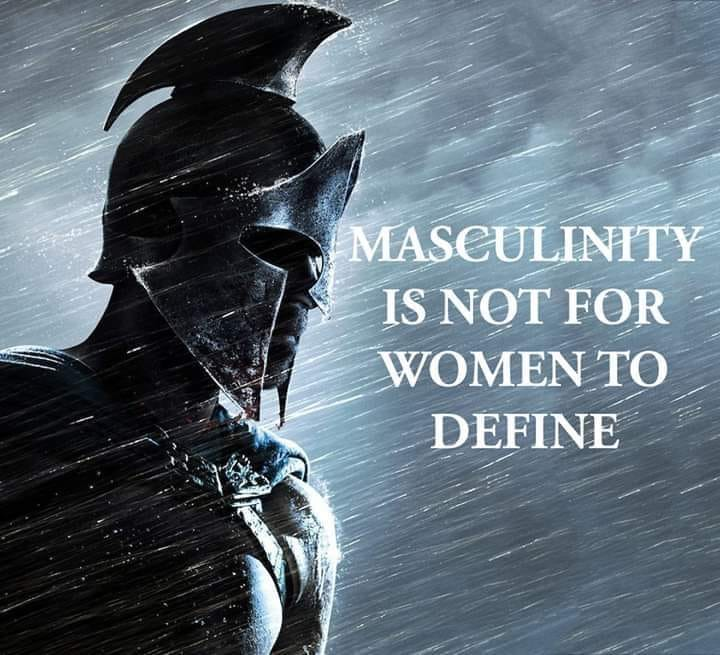
So, What is Masculinity?

Far from being toxic, masculinity encompasses positive traits vital for the growth of the self and society. At its core, masculinity refers to the unique qualities possessed by men. It does not imply any overall superiority/inferiority of a gender. Just as women have distinct attributes shaped by biology, men have capabilities and inclinations. Embracing these distinctions allows both genders to flourish.

Masculinity underscores virtues such as courage, leadership, protectorship, rationality, competitiveness, provision, and stoicism. Men often display analytical thinking, assertiveness, a penchant for adventure, risk-taking, and superior navigation skills. Across history, these traits empowered men as hunters, explorers, innovators, and warriors, with their physical strength proving indispensable for strenuous labor and defense.

Of course, men can exhibit feminine traits, and vice versa. However, men are naturally inclined towards masculinity as it aligns with their biological nature. Imposing societal expectations that discourage masculine expression leads to frustration and hampers progress.

Vital Societal Roles of Masculinity

Masculinity plays a crucial role, as men have historically fulfilled vital responsibilities. 

As protectors, they guided tribes and nations to safety. Male warriors defended borders, upheld justice, and safeguarded the vulnerable. Their physical strength and resilience make them well-suited for these tasks. Even today, in times of calamity, men continue to play crucial roles as first responders, firefighters, police officers, linemen, and emergency personnel. Their physical strength and courage are assets that prove invaluable in rescue missions and ensuring public safety. The historical legacy of men as protectors has seamlessly transitioned into the modern era, where their dedication to safeguarding communities remains evident.

Throughout history, men have been family providers, facing difficulty in ensuring sustenance and shelter. Their drive to succeed led to innovation, civilization development, and resource abundance. Even in the face of contemporary challenges, men continue to contribute significantly as builders, workers, and leaders. Their role in sustaining and advancing civilization persists, as they strive to meet the demands of a rapidly changing world. The resilience and determination that historically drove men to provide for their families now fuel their efforts to navigate complex societal issues and contribute to progress.

As fathers, men continue to shape the future by imparting essential values to the next generation. The qualities of honor, discipline, confidence, and perseverance that men exemplify are crucial for the development of well-rounded individuals. Studies consistently highlight the positive impact of involved fathers on children's growth, emphasizing the importance of masculine guidance, particularly for boys. In the absence of paternal influence, boys may face increased vulnerability to negative outcomes, underscoring the ongoing significance of men in shaping the trajectory of future generations.

In essence, men's roles in society have transcended the boundaries of time, adapting to the challenges of each era. Today, their contributions remain vital, as they continue to serve as protectors, providers, and influential figures in the development of resilient and thriving communities.

Dispelling Myths

Despite its necessity, masculinity is misunderstood. Myths suggest it promotes domineering attitudes, irresponsibility, violence, and chauvinism. However, authentic masculinity fosters the opposite. 

It is commonly believed that masculinity requires men to suppress their emotions and vulnerability. However, the truth is that masculine individuals experience a wide range of emotions but choose to display composure and self-control in public. They are selective about sharing their vulnerabilities to avoid being seen as weak in situations where showing weakness can lead to more problems.

Another common misconception suggests that masculinity leads to neglect of domestic responsibilities and a reluctance towards marriage and family. However, it is important to recognize that responsible fathers have always embodied true masculinity. Their commitment stems from a sense of duty, willingness to sacrifice, and deep care for their loved ones. Masculinity provides the strength needed to endure challenges and serve as a reliable foundation for the household.

Some argue that masculinity is associated with violence and aggression. However, unchecked aggression is not a trait of true masculinity but rather a sign of emotional immaturity. It can be correlated with being high on the neuroticism dimension of the Big Five personality factors. Interestingly, women tend to score higher on this particular dimension on average. Therefore, if a man lacks control over his emotions, he actually demonstrates less masculine behavior.

Many believe masculinity propagates the oppression of women. But properly understood, masculinity empowers both genders. Men's protectiveness and provision enable women to flourish and thrive in a safe and secure environment. True masculinity recognizes the inherent worth and capabilities of women and seeks to support and uplift them rather than oppress them.

Another misconception relates to the idea that masculinity is solely defined by physical strength and dominance. While physical attributes are a big part of masculinity, it is important to recognize that masculinity goes beyond physical strength. It involves qualities such as integrity, honor, resilience, and the capacity to lead with a firmness and boldness that need not be tied to physicality. Numerous studies have shown that embracing positive expressions of masculinity can have significant benefits for mental health. 

As these myths reveal, the vilification of masculinity relies on cherry-picking negative traits while ignoring the full picture. When grounded in virtue, masculinity catalyzes the best in men and society.

Threats to Masculinity 

Today, societal pressures discourage men’s masculine nature. Confusion about gender and attacks on masculinity compel men to suppress innate qualities, leading to melancholy and withdrawal.

Masculinity is condemned as patriarchal oppression, with terms like “toxic masculinity” assigning negative motives where none exist. The concept of male privilege and affirmative action imply men’s contributions are tainted, causing resentment.  

Popular culture denigrates masculinity by portraying men as bumbling fools, not inspirational heroes. Men are consistently ridiculed as uninspiring, incompetent, and immature. Even fathers are depicted as clueless and irresponsible. This inversion of gender norms mocks and weakens masculinity.

In school, environments discouraging competition and discipline demotivate boys. Reading materials and discussions cater more to girls. Society fails to provide meaningful rites of passage, giving participation trophies rather than earned achievements. Coddling boys rather than holding them accountable deprives them of the experiences needed to transition into purposeful, authentic masculinity.

Men often find themselves caught in a prolonged stage of adolescence rather than embracing true masculinity. They seek solace in activities like video games, pornography, substance abuse, and reckless behavior. Unfortunately, this lack of purpose leads to indifference and social isolation. Consequently, there is an increasing number of passive men who struggle with self-esteem issues and a sense of direction due to the absence of strong values.

Time to Reclaim Masculinity

In simpler terms, toxic masculinity, if it exists, can be seen as a diluted form of traditional masculinity in which boys and men do not fully embrace and develop the virtues of masculinity they inherently possess. 

The question then is how can boys and men become more masculine, free from the constraints of the myth of "toxic masculinity" created by feminists? The answer lies in not allowing these women to define what it means to be masculine. 

Boys and men should seek male role models who embody authentic masculinity, men who are physically strong but not bullies, assertive yet respectful, confident yet humble, stoic yet emotionally aware, disciplined yet open to possibilities, and seek to uphold virtues such as integrity, honor, and responsibility. 

By doing so, boys and men can reclaim their own narratives of masculinity and reject the notion that masculinity is some form of disease that they should suppress. There are toxic men as there are toxic women. Any toxic behavior exhibited by a man should not be automatically attributed to masculinity, exactly as it would be unfair to equate the toxic behavior of a woman to femininity in general.

In a world that readily acknowledges the achievements and struggles of women on International Women's Day, the silence surrounding International Men's Day speaks volumes. The prevailing bias against masculinity, perpetuated by societal misconceptions and misguided ideologies, undermines the genuine contributions of men. It is high time we challenge the narrative that associates masculinity with toxicity and oppression. By recognizing the positive qualities that define masculinity—courage, leadership, and resilience—we empower men to reclaim their narrative and break free from the constraints of toxic stereotypes.

International Men's Day should not be a day of silence but a day of celebration, acknowledging the invaluable roles men play as protectors, providers, and mentors. Let us move beyond the shadows of bias, dispel the myths surrounding masculinity, and embrace a future where both men and women are appreciated for their unique strengths, fostering a society that thrives on equality, understanding, and mutual respect.

Monday, September 11, 2023

The Tale of Two 9/11s: Honoring Loss, Inspiring Hope

It wouldn't be an exaggeration to say that the 9/11 terrorist attacks on the World Trade Center and the Pentagon impacted the psyche of America and the world in a way that very few other events have. The images of the two towers collapsing, the people fleeing in terror, and the devastation that was left in the wake of the attacks are burned into our collective memory. The 9/11 attacks were a shock and a wake-up call to the reality of Islamic terrorism in the Western world. Two decades later, these attacks continue to shape our world today. It's not that 9/11 was the first terrorist attack on America – it wasn't. But the scale and coordination of the attacks, as well as the brazenness of using commercial airliners as missiles, was on a level that no one had seen before. The destruction of the Twin Towers, in particular, was something that people couldn't wrap their heads around. For many, it felt like the world as they knew it had ended. 

In this short post, I would like to urge the world to remember a different 9/11, one that can help move the world away from the prejudice and hatred that fueled the 9/11 attacks. 9/11 is a historic day in world history not just because of the terrorist attacks but also because on this day in 1893, Swami Vivekananda gave his famous speech at the Parliament of the World's Religions in Chicago. This was a truly momentous event because it marked the first time that a Hindu monk had addressed a Western audience. Vivekananda, though initially nervous, bowed to Maa Saraswati -- the Hindu goddess of learning, and began his speech with "Sisters and brothers of America!" a common salutation (at least in India), but the authenticity with which he spoke those words struck such a chord with the 7000 plus audience that they gave him a standing ovation that lasted for over two minutes. This was an incredible feat, considering that, at the time, most people in the West knew very little about Hinduism and India.

In his speech, Vivekananda spoke about the unity of all religions and the need for religious tolerance. He said, "I am proud to belong to a religion which has taught the world both tolerance and universal acceptance. We believe not only in universal toleration, but we accept all religions as true. I am proud to belong to a nation which has sheltered the persecuted and the refugees of all religions and all nations of the earth."

Vivekananda's words ring even more true today in a world that is still reeling with religious hatred and intolerance that are rooted in supremacist religious ideologies. The 9/11 attacks were a brutal reminder of the consequences of such hatred. But, as we remember the innocent lives that were lost on that fateful day, let us also remember the words of Swami Vivekananda and recommit ourselves to building a world that is based on the Sanatana Dharma principles of respecting the dignity of all life, seeing the divinity in all beings, and working for the welfare of all irrespective of religious affiliation. Let us strive to create a world where supremacist religious ideologies cannot take root and fester. Instead, let us encourage a world where respect for pluralistic traditions and promoting religious tolerance are the norm. Only then can we hope to achieve true peace in our world.

It wouldn't be an exaggeration to say that Swami Vivekananda's speech at the 1893 Parliament of World Religions was a watershed moment in bringing Hinduism and India onto the global stage. At a time when few in the West knew anything about Hinduism, Vivekananda powerfully conveyed the spirit of universality that lies at the heart of India's ancient wisdom tradition. Just as the 9/11 attacks shaped the world we live in today, Vivekananda's historic address on that same date over a century ago impacted world history as well. His eloquent advocacy of religious tolerance and human fraternity resonates now more than ever in a world still struggling with religious divisions and strife. 

Two decades after the horrific 9/11 attacks, we would do well to keep Vivekananda's message alive. Those words of wisdom can serve as a guiding light as we work to heal divides, end prejudice, and build a more just and inclusive world order. Vivekananda's speech reminds us that when we recognize our shared humanity, embrace pluralism, and accept all faiths as true, we open the door to mutual understanding and cooperation. The road ahead requires perseverance and courage. But if we hold fast to these ideals, we can yet realize the dream of peace and harmony between all nations and peoples. The light of Vivekananda's universalist vision still shines brightly, helping illuminate the path forward even on the darkest of days.

Tuesday, August 15, 2023

Beyond the Flag Waving: Making Independence Day Matter

Today we celebrate India's Independence Day. This marks the day we officially broke free from British rule, although the truth is that we are still mentally tethered to our colonizers in many ways. We sure have broken numerous mental shackles, but many more still exist. They have become so much a part of ourselves that we fail to even notice them. So this Independence Day, let's resolve to identify and break free from at least one more shackle. Let's challenge the conditioned thinking that limits our potential and holds us back from achieving greater heights. 

Change always starts at the individual level. Let's identify one mental or physical habit in our lives that is no longer helpful and may even be harmful. It could be an addiction, a prejudice, a limiting belief, or anything else that constrains us. For me personally, it is my tendency to judge myself harshly and dwell on past mistakes. This habit only breeds guilt and inhibits my growth, yet it has become entrenched in my psyche. This Independence Day, I will start practicing self-compassion and focus on learning from my mistakes rather than berating myself for them. What is the habit you want to break free from?

Let's commit to breaking free of that habit. Change takes time, effort, and community support. So let's build a community that will empower us to realize true freedom. We can find people with similar goals who will cheer us on, advise us when we falter, and inspire us by their example. Our forefathers also relied on building a strong community to gain freedom. They supported each other through tremendous sacrifice and cooperation to make liberty possible. 

Independence isn't about going it alone, but rather interdependence - empowering one another so we can all realize our respective potentials. We are social beings who thrive when connected to others with similar values and aspirations. So let's build communities, both online and offline, to help each other break free of our self-limiting patterns. Together we are strong.

Unless we change ourselves, Independence Day celebrations are just empty events that don't make any real difference in our lives except to massage our egos. True independence comes from freeing our minds, not just celebrating historic political events. So this Independence Day, let's walk the talk. Let's pick one shackle to break free from and take the first step today. Our future selves will thank us.

Happy Independence Day to all my fellow Indians! May this day inspire us to expand the boundaries of our minds and lives.

Tuesday, February 21, 2023

Your friends are like your car’s tires!


Recently a friend posed an interesting question: How do you identify your true friends from the numerous people you consider as friends? She went on to answer her question by saying that true friends are those who stand by you in your difficult times. She shared some examples of her own friends who had supported her in moments of tremendous stress and difficulty, sometimes sacrificing their own comfort and convenience to do so. She further said that the people with whom you have parties and share good times are not necessarily your true friends.

Most people would agree with my friend's observations without any hesitation. We do indeed need friends to support us in our bad times. I certainly value every one of those people who stood by me during the rough times of my life. These are the people I trust the most and I am extremely grateful for their integrity and the loyalty that they have shown me.

However, is it wise to completely discount the people who were there with us during the good times? There is a colloquial expression for a person who is there with you only during your good times. We call them 'fair-weather friends'. These are the people who are only present when things are going well, but disappear or are less available when challenges arise. The implication is that they are unreliable and do not deserve to be called our friends.

I agree that we should not rely on 'fair-weather friends' to provide us with necessary support and assistance during 'foul-weather' conditions. Doing so would be sheer naivety. However, does that mean that 'fair-weather friends' are useless? Not necessarily. While we may not turn to them for support during difficult times, they often provide us with useful companionship and levity in moments of joy and contentment. We may or may not decide to call them "our true friends," but they still do enrich our lives by providing us with many memorable positive experiences in life.

Friends are like our car tires. They both provide support and help us move forward through our life's journeys. And there are many types of tires as there are many types of friends. All of them have their own unique roles to play. For example, there are Summer tires - let's use them as a metaphor for fair-weather friends - which are primarily designed for high-performance vehicles and provide optimized dry and wet performance levels in a temperate environment. Rather than being useless, these tires serve the great purpose of giving us a wonderful ride and experience on warm and sunny days.

Then we have the Winter tires - the metaphor for our dependable foul-weather friends. We depend on these tires to smoothly traverse through the slippery and icy road conditions of the Winter. While the Winter tires work great in snowy and icy conditions, they are not ideal for the Summer months. When used in the Summer, they tend to wear out faster, reduce fuel efficiency, and make your car less responsive and grippy, especially at high speeds. In other words, these tires just don't provide the same joyous experience as the Summer tires do during the metaphorical 'sunny times' of our lives.

So, we do need both fair- and foul-weather friends in our lives. Some people - for example, those high on the extraversion personality dimension - make for excellent company during the good times, while others - for example, those high on the agreeableness and conscientiousness personality dimensions - make for highly dependable friends during bad times.

We may wish that all our friends were like all-season tires, that supposedly provide the best of both worlds - reliable performance in all weather conditions and great comfort. However, any tire expert will tell you that all-season tires are more of a compromise than an ideal solution for varying driving conditions. The same goes for our friends too. Our all-weather friends may stay with us through thick and thin, but what they offer may not be optimal in all situations. And that may not be because of their lack of loyalty or commitment. Instead, they may simply lack the unique capabilities and temperament that made somebody else a perfect fit for a certain life-situation.

In conclusion, true friendship goes beyond being there during our difficulties. We need both fair-weather and foul-weather friends. They both have important roles to play in our lives. Rather than looking down upon our fair-weather friends, let us appreciate them for magnifying the joyous experiences of our life. Needless to say, let us also thank our foul-weather friends for being a pillar of strength and support during our storms. Both of them enrich our lives in their own unique ways.


Photo credit: Clem Onojeghuo @Unsplash.com

Saturday, February 11, 2023

My Critique on Charles Bukowski's poem, "so you want to be a writer?"


Yesterday I shared Charles Bukowski's poem "so you want to be a writer?" on my Facebook timeline, and many of you liked it. I shared it because it is a beautiful poem. But I must also add that I do not agree with all the thoughts expressed in that poem. In this short essay, I provide my reflections on the poem. It is partly a critique and partly an appreciation of the poem. Hope you enjoy it!

Charles Bukowski is known for his dark, straightforward writing, and this poem is no exception. But let me start with the bright side of the poem. The poem wonderfully conveys some of my experiences as a writer as well. I am no big writer, but even a lesser mortal like me has experienced times when writing was an absolutely joyous experience. These were the times when I seemed to be in a zone; the words, sentences, paragraphs, and even entire monographs flowed without much effort. Bukowski describes this experience in the last few lines of his poem:
"...you have been chosen,
it will do it by
itself and it will keep on doing it..."

These lines capture the sheer beauty of writing. When I have been in a similar state, writing has felt completely effortless. Time flies by without me noticing it. It is a truly wonderful experience; you almost feel like you have been "chosen" by Maa Saraswati Herself to communicate certain ideas to the world. It is simultaneously a humbling and rewarding experience, because you know your capacities as a writer are extremely limited compared to the effortlessness with which the ideas and words flowed out through you. But then such experiences are few and far between, not just for the relatively low-level writers like me, but for the greats as well. Most of the time, writing involves a tremendous amount of effort.

Most of the time
"it doesn't come bursting out of you."

Most of the time, you do
"...have to sit for hours
staring at your computer screen
or hunched over your
typewriter
searching for words..."

Most of the time, you do
"...have to sit there and
rewrite it again and again..."

Most of the time, writing is
"...hard work just (even) thinking about doing it..."

What do you do when you experience such challenges? Bukowski provocatively answers this question several times in his poem: "don't do it."

Bukowski says,
"...don't do it
if you're doing it for money or
fame,
don't do it.
if you're doing it because you want
women in your bed..."

It is difficult to disagree with Bukowski here. He is essentially emphasizing that it is more important to have intrinsic motivation for writing rather than extrinsic motivations such as money or fame. There is a humongous body of literature supporting the benefits of intrinsic motivation.  So, Bukowski is not wrong here.

But at the same time, I cannot agree with his idea of not doing it if you are having difficulty. Bukowski seems to have a rationale for why one should stop trying:
"don't be like so many writers,
don't be like so many thousands of
people who call themselves writers,
don't be dull and boring and
pretentious, don't be consumed with self-
love.
the libraries of the world have
yawned themselves to
sleep
over your kind.
don't add to that."

In other words, Bukowski seems to be concerned about the quality of writing that is out there in the world, and he likely thinks it is because far too many people are writing who simply lack the aptitude to do it well. This is akin to many mediocre musicians trying to make it in the music industry, or many terrible actors trying their luck in films. You can call it elitist thinking (and that would not be incorrect) but Bukowski doesn't want more mediocrity in the world of writing.

You cannot argue for mediocrity in any field. But at the same time you cannot ignore the fact that in order to produce great work, a person must first put in tremendous amounts of effort to become a competent writer. And that involves long hours of practice and dedication. One of my professors in my Ph.D. program, who is among the top three most highly cited researchers in my field had told me that he did not consider himself a talented researcher or writer at all. Instead, he thought of himself as at best a man with average capabilities. But he had exceedingly high levels of grit that made him work hard for more than anyone else, and that's what gave him the edge in the end.

So, while I agree with Bukowski's sentiment that we should strive to write better and produce great works of art, I think we should never forget the effort it takes to become a skilled writer. Hard work, determination, and practice are necessary components of becoming a great writer. This means toiling away at it, and not giving up despite the difficulty of the task. During these times of frustration and difficulty, it is important to ignore Bukowski's advice of "don't do it." Instead, you still do it!

You have to sit there and write even when it is hard because that is the only way for you to develop the capacities that facilitate the experience of those rare moments of Maa Saraswati's grace where everything just flows effortlessly. You have to go through the grind to experience the euphoria. There is no other way!

Friday, September 16, 2022

Spirited


From a spirited childhood
To a spiritual adulthood 
From embodied joy
To embodying stress

From the simplicity of being 
To the complexities of doing  
You move through
The first half of your life.

You become spiritual
Not to seek the Divine
But to fulfill your material desires 
And to cope with inevitable failures.

You accept the limited
In place of the unlimited.
What should have freed you
Instead imprisons you.

This journey continues
With many twists and turns
Your spirits rise and fall
With every ebb and flow.

Until that day
When you become aware
Of your true nature
That is Sat-Chit-Ananda.

For most of us
It happens slowly but surely
You get disentangled
From your self delusions.

One by one
You drop your masks
And the defenses
You had built over the years.

They had to go
Because they could not
Hide you from Yourself
Or protect You from you.

You feel a little vulnerable
But also much lighter
You shed the dead weight
And then the Spirit soars.

This is the beginning
Of a new journey
A return to your childhood
To a life of simplicity and joy.

Where you can move
Beyond false pretensions
Of being spiritual
To being spirited again.


Photo Credit: Robert Collins on Unsplash

Wednesday, June 3, 2020

The Paradox of Quality

I was talking to a colleague (and friend) today who would be retiring soon. I asked, "What plans do you have for your life post-retirement?" She replied, "There are so many things that I want to do... However, I haven't finalized what exactly I will do." The things that she listed were all, in one form or other, related to trying to make a meaningful difference to the world. My friend is already an accomplished academic, leader, sportsman, and contributor to the local community. So, I have no doubts that she will carry forward her excellence into whatever she takes up in her post-retirement life.

The conversation led me to reflect for some time today on how we all wish to make a difference in this world. This is a fundamental need that we all have. The nature and scope of the impact that we wish to make may vary from person to person. Some people may be highly ambitious while others may have modest goals, but the wish to make a difference in our unique way is pretty universal.

Now, how do you know that your work is making a significant difference? There are many ways to figure this out, but the most straightforward way is to evaluate the objective and subjective feedback that we receive for our work. Thus, a writer may wish that his book sells millions of copies (objective) and that his readers also rate his book highly (subjective). Similarly, a musician may wish that her music video gets millions of views and that her music is appreciated by the majority of the viewers (Because it is certainly possible to be a viral sensation for all the wrong reasons). The point is that irrespective of what we do, we all want to be successful on both objective and subjective terms. But then the big question is, "How can we make the kind of impact that we wish to make?"

Again, there can be many answers to that question. People follow different strategies based on what they believe. For example, some people may place heavy emphasis on producing high-quality output while others may focus more on marketing, and so on. Let me focus on quality in this post, because marketing (although important) will be mostly useless if the quality of output is shoddy. Thus, according to me, high-quality output matters much more than marketing, albeit quality doesn't automatically guarantee success. Stated otherwise, quality-output is a necessary if not sufficient condition for success. In simple words, if you can produce high-quality output, then it is more likely that your work will be valued by others. The obvious question then is, how to produce high-quality output?

The quality of our output is dependent on many factors. Certainly, our talent has a role to play. However, the world is filled with people who had talent but didn't amount to anything. That's because talent is just potential. Howsoever talented we may be, we will not produce high-quality work if we do not put the necessary effort to hone and sharpen our skills.

People who are committed to bettering their skills usually employ one of the two strategies: quality or quantity. By 'quality strategy', I mean that people tend to focus on creating high-quality output from the very beginning. They spend a lot of time in the preparation of activities so that the output that will produce will be of superior quality. For example, a writer may invest a tremendous amount of time researching his topic, edit his sentences thoroughly so that no mistakes are present. In the 'quantity strategy,' people are eager to produce instead of being preoccupied with the quality of output. Going back to the writer-example, a quantity-focused writer would just write a lot without worrying too much about the quality of what he writes.

So which strategy wins? Well, the answer is not straightforward. Both strategies surely have their merits, and one should not be pursued to the exclusion of the other. However, what needs to be remembered is that ultimately skills are perfected by doing, and not just by preparing. In other words, a quantity-focused approach may often be a wiser strategy than a quality-focused strategy. Let me explain what I'm saying through an example.

Jerry Uelsmann's Surreal Photography

Jerry Uelsmann is an award-winning photographer who graduated from my alma mater, Indiana University. He pioneered the art of creating surreal images in the darkroom, way before the advent of Adobe Photoshop. While teaching photography to his students at the University of Florida, he once conducted an experiment. He divided his class into two groups. One group (the Quality Group) was asked to submit their single best piece of work for their course grade. The second group (the Quantity Group) was asked to submit the maximum number of photographs they could for their grade. This group was told clearly that the quality of their photographs would not be evaluated. It didn't matter if their photographs were great, good, bad, or even horrible; they would be graded solely on the basis of the number of photographs they submitted.

Which group do you think created the high-quality output that is so essential to success? Professor Uelsmann was guessing it would be the Quality Group. On evaluating all the submitted photographs himself and also by independent raters, however, he concluded that the Quantity Group created the best images. There can be many explanations for the superior quality produced by the Quantity Group. Maybe they were less stressed about their output, or maybe this low stress allowed them to experiment more with their images, or maybe the quantity focus simply gave them more practice which ultimately enhanced their photography skill. Most probably, it was a combination of all these factors and more. Whatever the reasons,  it turns out that often the best path to achieve quality is through quantity. Let's call this the paradox of quality. This should be a lesson for all those perfectionists who get so hung up on creating their perfect product that they never create anything. Unfortunately, the world is full of such perfectionists. Even I am one of them.

Wednesday, March 21, 2018

What would you do if you only had a year to live? 3 Lessons from the life of Stephen Hawking

What would you do if you only had a year or two to live? Seriously, take a pause from reading this article and think of how you would spend the last two years of your life if that's all you were left with.
Hawking (23) with his bride in 1965
Now my guess is that many of us would probably try to go the hedonistic route, i.e., we will try to fulfil as many of our pleasure-oriented desires. This may manifest in terms of drinking, seeking sexual gratification, or simply trying to check-off items from our bucket list, such as traveling to certain places in the world.  If we have big familial responsibilities, we may also try to earn as much money as possible before dying so that we can ensure some financial security for our family members when we are no more around to provide for them. That was certainly the theme of the hit TV show Breaking Bad. Some of us may also decide to simply spend more time with our loved ones, or if we are the religious kind, spend praying so that we have a better afterlife. Now I am not here to criticize any of these responses. In fact, all these responses may be valid in their own right. However, just because our response is reasonable does not mean that it is also optimal or the wisest response.

Stephen Hawking was 21 years old when he was diagnosed with Amyotrophic lateral sclerosis (ALS) or Lou Gehrig's disease, a disease where the death of motor neurons causes you to progressively lose control of all your muscles, ultimately reaching a point where you even fail to breathe and die. Hawking's doctors gave him about two years to live. We now know that Hawking went on the live till the age of 76, over half a century longer than what his doctors had predicted. This happened partly because Hawking suffered from a specific type of ALS that progressed much slower than the more common form of ALS, and also because of the technological advances that enabled him to stay alive with the help of machines.

Pursue your passion even if it were the last year of your life
Of course Hawking didn't know he would live so long. As would have happened to anyone of us in his situation, he went into a state of depression on receiving the news about the disease from the doctors. And he almost decided to drop out of the graduate school that he had recently enrolled in. However, after the initial phase of shock was over, he decided to continue his pursuit of Ph.D. with a renewed vigor. Now this may seem an unusual choice. But if you know that you enjoy science the most, why would you spent the last years of life any other way but in the pursuit of science?

So do you know what you are most passionate about? Are you spending the bulk of your current life pursuing that? Or are you simply dilly-dallying your life away? This may not be your last year of life, but it may very well be too. We will never know for sure until we are face to face with death. So why waste our life away? Or wait until the time when we are confronted with a fact that we have a year or two to live? Why not live our life as if it were our last year on Earth? Aren't we wasting our life if are living any other way?

Using a lot of technical jargons is not smart. Being able to communicate a complex topic in manner that an average man can understand is.
I learnt about Hawking for the first time when I was in my high school. That was the time when multiple copies of his most famous book A Brief History of Time had arrived at the city library where I grew up. The librarian who was a good friend of mine recommended me the book. I picked up Hawking's book with excitement, but I must confess that I found it a hard read, and did not also complete the book. However, that was a reflection of my lacunae in comprehension rather than Hawking's lacunae in expressing things simply; I know this for sure in retrospection.

There have been many great scientists throughout history, but very few of them have also been successful in communicating their ideas to the general public. Now a scientist need not take up the role of disseminating knowledge to the public. However, when they do and do it effectively, they help immensely in popularizing science.

My Ph.D. advisor Dr. Philip Podsakoff, who is one of the top 3 most highly cited management researchers in the world, used to say, "You should have so much clarity about your research that you should be able to explain it to your grandma in a manner that even she understands it." Needless to say, some of our grandmas may be extremely knowledgeable and may easily be able to delve into the depths of our research. So my professor's intention was not to make any gendered statements. He simply was describing the characteristics of a good thinker. A good thinker is not stuck in technical jargons and equations, and can easily express the main ideas of a complex topic in a manner that even an average person with no technical knowledge can understand it. But irrespective of how good or bad we may be in expressing complex ideas in simple and clear ways, we all can improve.

Scientific research is difficult but it need not be devoid of fun. Just don't take yourself too seriously.
Stephen Hawking once hosted a big party at his university. He had written out invitations to many people for that party, including his colleagues and many other famous scientists. Unfortunately, no one showed up to the party. The reason was simply because Hawking sent out the invitations only after the party was over. He did this to playfully make the point that time-travel is not possible. His logic was that if time-travel were possible, then people from the future would have known about his party and somebody from the future should have showed up at his party through time-travel.

Hawking may have lived most of his life as a quadriplegic, dependent on machines for his survival and to communicate with the world, but that did not diminish his verve for having fun and cracking jokes. He is known to have placed several bets with some of his colleagues on competing theories. Despite his genius brain, he was not always right and lost some of those bets. One of the famous bets he lost was to John Preskill from Caltech, where Preskill's argument that information could escape from Black Holes was found to be true. Hawking had argued the contrary, and conceded his defeat by buying Preskill an encyclopedia of baseball for Preskill. Such friendly competitions not only helped in the progress of science but also made the pursuit of science fun. Unfortunately, not all of us pursue science with a spirit of play. So we can all learn a lot from Hawking. If a great mind such as Hawking didn't take himself too seriously, what excuse do we have? We are all fallible. So instead of justifying our faulty research or hiding it, we need to learn to acknowledge it and even celebrate our failures. That's the only way science can move forward.

Wednesday, February 8, 2017

The use and misuse of "creative license" in movies

Today's post is a continuation of the discussion that I started on the incident of filmmaker Sanjay Leela Bhansali being slapped by some members of the Shri Rajput Karni Sena for the suspected inappropriate portrayal of Rani Padmini in his upcoming film Padmavati. While the last post focused on the question of whether that incident could be consider terrorism, today's post attempts to explore the limits of artistic license. More specifically, I share my thoughts on what forms of artistic license are appropriate and not appropriate.

Artists have high levels of artistic license when they are working on projects that are completely fictional. For example, no one cares much if the hero in a fictional movie defies all laws of gravity and common sense. Artistic license helps bring interesting variety to characters. For example, aliens in movies have been conceptualized in wide variety of forms from tripods to octapods to shape shifting creatures and machines. They have been conceptualized from being malevolent to completely benign. They have been thought of as super-intelligent creatures to ones with more like reptilian-brains. The point is that all of these different forms of aliens are valid, because after all they are products of creative imagination and have no basis in reality. It is only when a certain filmmaker starts adding elements into the aliens that have parallels in reality that the ethics of artistic license comes to play. Let's take a hypothetical example of a Sci-Fi filmmaker who always depicts his his malevolent aliens as black in color and his benign aliens in lighter shades. Let's also say that his malevolent aliens always (or mostly) speak with African-American accents while his good aliens always (or mostly) speak with English accents. This would make us suspect that our Sci-Fi filmmaker is a racist. We would then say that the filmmaker is mis-utilizing the creative freedom given to artists. The filmmaker may still get away with it from a legal point of view, but would still be considered a racist.

Now things become more complicated for projects that are based on historical or real-life cases. My friends know that I am fond of such movies. That of course, doesn't meant that such movies get their facts right. In fact, almost all such movies get something or the other wrong. But that is not necessarily a bad thing, because movie makers often have to take some creative liberties to fit complex events into the format of a 2-hour feature film. For example, in the recent movie Patriots Day, the character of Sgt. Tommy Saunders played by Mark Wahlberg wasn't a real person but a composite of several police officers who had immediately responded to or investigated the bombings that happened at the Boston Marathon of 2013. You overlook such inaccuracies in the movie because you understand that such artistic liberties need to be taken to simplify a complicated investigation process. Peter Berg, the director of Patriots Day, was still criticized for not crediting a brave Black cop named Dennis 'DJ' Simmonds who suffered brain injury when one of the terrorists hurled a bomb towards him; DJ died a year later, and his death was linked to the injuries he had suffered during the blast.

The point is that artists can take less creative liberties when it comes to projects that they claim to be based on real historical cases. Again, it does not mean that they cannot take any creative liberties, but that their choices will be evaluated with more critical lenses. For example, the movie 300 which was based on the "historically inspired" comic book by the same name had many factual inaccuracies. Frank Miller, the creator of the comic said this about some these inaccuracies:

The inaccuracies, almost all of them, are intentional. I took those chest plates and leather skirts off of them for a reason. I wanted these guys to move and I wanted ’em to look good. I knocked their helmets off a fair amount, partly so you can recognize who the characters are. Spartans, in full regalia, were almost indistinguishable except at a very close angle. Another liberty I took was, they all had plumes, but I only gave a plume to Leonidas, to make him stand out and identify him as a king.

I think any reasonable person wouldn't mind these inaccuracies. However, some of the other "creative liberties" taken by the makers of 300 generated valid criticism. For example, some historians criticized that the Spartans were actually a slave-owning society, although they were projected as a culture that valued freedom the most. Similarly, the Persians are shown as an "incarnation of every Orientalist stereotype imaginable: decadent, oversexed, craven, weak, spineless," which naturally wasn't taken positively by people from Iran.

Coming back to the case of Bhansali's Padmavati, I don't know the kind of artistic liberties that he has taken, simply becauAse I haven't read his script. But given Bhansali's history with mangling historical facts, is it not natural for the Rajasthanis and all Indians to be apprehensive about the way their beloved legends have been depicted in the movie? By the way, before I proceed further, I must say that I have loved many of Bhansali's movies. I think some of his initial movies, such as Khamoshi: The Musical and Hum Dil De Chuke Sanam. I never saw Devdas, primarily because I am not fond of the idea of glorifying a depressed drunkard. I did watch Black, a movie that was praised to the skies because of its novelty and sensitive portrayal of different forms of disability. But frankly I was heavily disappointed by Black, not because it was a badly made film--it was actually very well made--but I abhor it when filmmakers plagiarize a movie and don't give credit to their source of "inspiration." I had seen and loved the 1962 Oscar-winning movie, The Miracle Worker, from which Black had been copied (including frame-by-frame reproduction of some scenes), so couldn't appreciate what was touted as an "original" movie.

People--including many of my friends--went gaga over Bhansali's last movie Bajirao Mastani, but I hated the fact that Bhansali reduced the story of the great warrior Bajirao I to that of a lunatic love story. Bajirao I, the man who challenged the reign of Mughals and never lost a single battle in his military career of 20 years, was shown dying a depressed and delirious lover. The warrior whom the British Army Field Marshal, Bernard Montgomery, had described as "possibly the finest cavalry general ever produced by India" was shown to be a man who easily gave up his fight against the "discriminations" that he received within his own society for having taken a second wife who happened to be partly Muslim. Instead of celebrating the Hindu culture that helped let a Brahmin (priest) emerge into the role of a Kshatriya (warrior), the movie took a lot of pains to show the Marathi culture of the 1700s in poor light. The mother of the great Peshwa was shown as an evil person who was ready to sacrifice her own son for the pride of her Hindu-Maratha culture. By the way, I am not claiming that the Hindu and Marathi culture of those times were all perfect, but I would have appreciated it if Bhansali had at least put in a little effort to highlight the reasons behind the Maratha's antagonism towards the Muslims. The Marathas after all had been the strongest resistors of the Mughals for over a century. It is well known that the Mughals, especially during the reign of Aurangzeb, had not only demolished countless temples but had also committed immense atrocities on the Hindus and Sikhs of India, literally killing, raping and forcibly converting millions of the population.

In summary, I have two points with respect to artistic liberties. First, artistic or creative license is not a license to falsify facts and depict historical characters and cultures based on our own whims and fancies. Second, creative license is not the same as not having any responsibilities towards one's society.  For example, creative license does not mean we should be including an item number (that objectify women) in all our movies just to titillate the audience. Hollywood makes tons of movies based on real life but almost all of them celebrate the inherent goodness of the American society and the American military. America is always saving the world in Hollywood, be it in works of pure fiction or movies based on some real incidents. Yet, in India, filmmakers seem to take immense pride in showing only the dark sides of the country. Again, I am not saying that India doesn't have any dark side or that those dark sides should not be shown, but no society becomes great by only pointing out faults in it. For a society to become great, you have to celebrate it, and you have to take pride in it. If filmmakers want to become instrumental in the building of a great India, they should make at least one positive film on India for every negative film that they make. Always pooh-poohing the society may make you appear liberal and cool, but you effectively do a great disservice to the society. To be fair, Bhansali is not the greatest offenders of the misuse of creative license--in fact, his offenses are pretty tame in comparison to others--but I hope and wish that the quality filmmakers of India also make historical movies that fill the people with a sense of pride about being Indian.

I will end this post with a recent video by poet-turned-politician Dr. Kumar Vishwas where he recites a poem by Pt. Narendra Mishra on Rani Padmini. The spirit that this poem evokes should be what the filmmakers of India should aspire to evoke in their movies. Jai Hind!


Disclaimer: Although I shared the video of Kumar Vishwas here, I am not a supporter of Aam Aadmi Party. Rather I am very critical of it, especially its leader, Mr. Arvind Kejriwal.

P.S.: Please share your thoughts on the ideas expressed in the article in the comments section below. Thank you!

Saturday, July 25, 2015

A good life

What is a good life?
The one without strife?
Having friends of your type?
Or living fit till age ripe?

Having a spouse supportive?
Engaging in something creative?
Earning a lot of money?
Or having a cute baby?

The wise say, "None of these."
Good life isn't about goodies.
It is about doing your duties
Like accomplished karma yogis.

And I do practice karma yoga
But being an amateur fella
I often fail to practice
Especially, when I go off axis.

Then like most human beings
I wallow in negative feelings.
Giving up on myself, I quit
Instead of living life with grit.

So now I strive to be at ease
Howsoever rough are the seas.
I may swim or may drown
What matters is I do not frown.

With this motto, I live my life
That I will never fuss and gripe.
For a good life is not outside me,
It is my soul and esprit.

Monday, June 22, 2015

Who is a Yogi and Who is a Dhongi?

First of all, my apologies to all those friends who have expressed that they have been waiting to read about the second half of my European backpacking trip that I completed last month. Since my return I have been preoccupied with a handful of "Important & Urgent" matters, and so haven't been able to write that post, but I promise to do it soon, may be even later this week.

Today's post is a quick response to a meme I noticed on different social network websites in connection with the International Yoga Day celebrations. As you all know, the first International Day of Yoga was celebrated all around the world yesterday. Thanks to the initiative of the Indian prime minister Mr. Narendra Modi, in December last year, the United Nations General Assembly had approved June 21 to be celebrated as International Day of Yoga every year. The celebrations were a huge success both in India and abroad. However, as is inevitable, the celebrations, especially in India, also generated some criticisms (for example, this was all a PR stunt for Modi, etc.). This post is not a critique or evaluation of those criticisms. My post is just in response to the meme below circulated by Modi-haters which reads as follows in English: "He can't even sit in padmasana (the Lotus pose)... Modi is no yogi; He is a dhongi (a cheat)."

Congress party's meme on Narendra Modi following the International Day of Yoga celebrations in New Delhi
When I saw this meme, I immediately did a Google search on "Modi and Padmasana," because it seemed a little odd to me that Modi can't do a padmasana. First, padmasana or the lotus pose might be a difficult pose for many Westerners but it usually isn't for most Indians who have the habit of sitting cross-legged on floor from childhood. Also, it seemed odd that Mr. Modi couldn't do a lotus pose, given that he had spent years as a pracharak for the RSS; yoga along with many fitness exercises are commonly practiced at all the shakhas (or branches) of RSS.

Not surprisingly, the Google search yielded many pictures of PM Modi sitting in perfect padmasana. When I shared one of these pictures with the friend who had posted the meme, I immediately got a skeptical response that the picture must have been photo-shopped. Now, I love healthy skepticism, but this seemed more like a prejudiced response to me, because the response was immediate. In other words, no time had been spent to verify facts. Also, I couldn't see any noticeable signs of photo-shopping. Lastly, at least one of those pictures (the second one below) came from a reputable source, specifically The Sunday Times, so I had no reason to suspect the authenticity of the pictures.

Narendra Modi in padmasana
Anyway, the point of this article is not to prove that PM Modi is a great yogi. First of all, I'm not a Modi bhakt (devotee), so I don't have any motivation to do prove anything on behalf of Mr. Modi; nor does he need me. Sure, I'm a fan of his on certain issues, but I'm also as big a critic of him. Second, and more importantly, I don't know Mr. Modi personally. So I have no basis of knowing whether he is a "true" or "fake" yogi, but nor do the people who keep sharing memes about Mr. Modi being a "fake" yogi.

The point of this article is to educate people about who could be considered a true yogi. As those familiar with Sanskrit know, the word yoga means being in union with the supreme spirit or cosmic energy. Today, most of modern yoga may have been restricted to poses and physical exercises, but yoga as a discipline goes much beyond manipulating the body.

Patanjali in his famous Yoga Sutras described eight limbs of yoga:
  1. Yama: These are the five things that yogi must abstain from:
    1. Ahimsa: Abstain from all forms of violence (including verbal)
    2. Satya: Abstain from falsehood
    3. Asteya: Abstain from stealing
    4. Brahmacharya: Abstain from sexual misconduct 
    5. Aparigraha: Abstain from greed
  2. Niyama: These are the five observances
    1. Śauca: Purity in thoughts, speech and action
    2. Santosha: Being content with oneself and one's circumstances
    3. Tapas: Persistent austerity
    4. Svādhyāya: Engaging in self-reflection
    5. Ishvara-Pranidhana: Contemplation on the nature of True Self
  3. Asana: Literally means "a seat" or to be able to sit continuously for long periods of time. Later (in the Hatha Yoga Pradipika), asanas also came to mean the yoga poses that we practice today. But the point to remember is that they are still meant to help the body be still for long periods of time, something that is essential for samadhi.
  4. Pranayama: Breathing exercises (literally means having control over one's breath and life force)
  5. Pratyahara: Withdrawal of the sense organs from external objects or not being a slave to external attractions.
  6. Dharana: Concentration
  7. Dhyana: Meditation
  8. Samadhi: Merging or uniting one's consciousness with the higher Self.
Among these eight limbs, the last one, i.e., samadhi is the most difficult to attain, and ultimately the goal of yoga. So, a true yogi is one who has mastered the art of going into and coming out of samadhi. In this sense, perhaps 99.999999% of the practitioners of yoga (and that includes me) are not really true yogis. Forget samadhi, most of us can't even keep our body (asana) and mind (dharana) still on our will for a few minutes.

Does that mean that we all are fake yogis then? No, I won't say that. We all may call ourselves yogis, but only in the sense of being learners or students of yoga. And as students, we are yogis only to the extent of commitment we have made to the whole eight-fold path of yoga, that which involves disciplining not just the body but also the breath, mind, sense organs, and subtle energies so that they are all in better alignment with the supreme spirit and/or cosmic energy.

In other words, there are essentially two ways to view the word yogi: 1) a person who has mastered the process of going into samadhi (yogic union with the higher Self), and 2) a person who has committed himself/herself fully to all the eight-limbs of yoga (and not just the yoga poses). Most of us practitioners of yoga have never reached samadhi, so we can't truly call ourselves yogis. Most of us have also not made a 100% commitment to all the eight limbs of yoga, so we can't even call ourselves as good students of yoga.

You may ask, "OK, so what are you saying about Modi? Is he a true or fake yogi?" My answer to these questions is that you are asking the wrong questions. Whether Mr. Modi is a true yogi or not is his business, not ours. Our business is to focus on ourselves. We should engage in repeated self-reflection (svadhyaya) and evaluate how much we have really committed to the process of becoming a yogi. That's all there is. Sincerely try to be a good yogi, but don't waste your time trying to prove to others that you are one. As a corollary, if you are trying to prove to others how true/good a yogi you are, then you are most likely not.

Sunday, March 29, 2015

I do not know

I do not believe
What I cannot perceive.
I believed once
In Providence
But not anymore.
Life is what it is
Nothing less nothing more.

I do not know.
That's all I know.
The way of the wise
Is to hypothesize,
Look for evidence
Within and without, but
Live life without pretense.

Saturday, October 18, 2014

Hindsight Reflections on the Ph.D. Degree

Matt Might's Illustrated Guide to a Ph.D.

If you have a Ph.D., or are pursuing one, you have likely come across the above illustrated guide to a Ph.D. by Matt Might. I was reminded of this model today when a friend of mine posted it on Facebook. I think Might's model is an excellent depiction of the process of getting a Ph.D., but more in a prescriptive sense than in a descriptive way. It is not a good descriptive model, because I have read quite a few doctoral theses that were nothing more than a rehash of the existing body of knowledge and provided absolutely no new insights about the phenomena they were purportedly about. Such theses often tend to be from universities with poor standards, but periodically you also stumble on theses from top universities which are of abysmally poor quality. The problem is that the system that grants the Ph.D. degree, like most other systems, is not a foolproof system. Consequently, many people get the coveted degree without coming even close to the boundary of existing knowledge, forget making any dent to it or even attempting to push it. Nonetheless, I love Might's model because it beautifully underscores a goal that doctoral students should aspire for. No wonder, he uses it every Fall semester to inspire the fresh batches of Ph.D. students at his university.

The day I successfully defended my Ph.D. thesis in front of my dissertation committee was truly one of the happiest days of my life. First, it meant that all those years of hard work had finally payed off. Second, it was gratifying that my committee, which literally consisted of living legends in the field of organizational behavior, lavishly praised the quality of my work. One of the esteemed members on my committee even went to the extent of commenting, "This is how a dissertation should look like." Lest you think otherwise, let me make it clear that I'm not here to shower praise on my own doctoral thesis. In fact, with the wisdom of hindsight, I don't think much of my dissertation at all. Although there is nothing like a limitation-free research paper, I feel that my dissertation had way too many limitations than would be acceptable to me, if I were conducting the same studies now. In this sense, my Ph.D. work did push boundaries of knowledge, but primarily my own. Alas, I can't say with confidence if my work pushed the boundary of human knowledge!

If a Ph.D. degree from a top university is a definite sign that one made a tiny dent into the boundary of human knowledge, then I might have. But as I delve deeper into the topics on which I have conducted my research, I am also confronted with the reality that the insights gained from these studies were not necessarily "brand new" that no one had ever talked about before. As the English mathematician and philospher, Alfred North Whitehead is known to have said, "Everything important has been said before." So did I really make a dent to the boundary of human knowledge with my doctoral research? It would be hubris to believe that I did. Perhaps it is pretentious of anyone who believes that s/he succeeded in making a dent, however tiny, to the boundary of human knowledge with just his/her Ph.D. degree. Sure there are greats like John Nash, whose short, 28-page doctoral dissertation from 1950 later earned him the Nobel Prize in Economics (1994), but not all of us are John Nash. Even for Nash, the dent was too tiny in the beginning to be immediately recognized by other researchers. Hell, it took 44 years for the Nobel Committee to be sure that his dissertation work had made a real dent to the field of economics! So, below is an illustration of how my perception of the Ph.D. degree has changed over the couple of years since I got mine.


Sunday, July 13, 2014

40 Days

100% commitment, as we have been discussing over the past few weekends, is an excellent and essential discipline to achieve something substantial in life. However, 100% commitment is a difficult practice, especially if it is a daily undertaking. That's why many people shy away from this discipline, and don't even give the discipline a chance. This I think is sad, because the discipline has so much potential to literally transform people's lives. Thus, I tell my students to start small. Starting small does not mean you start with 5% commitment and gradually increase your level of commitment to double digits and ultimately to 100% commitment; that will never work. Instead it means that you start your discipline of 100% commitment for short and manageable periods of time. For instance, it may be daunting to commit oneself to go on morning walks everyday for the rest of one's life, but it isn't to make this commitment for just one week or one month.

My favorite period for starting a 100% commitment is 40 days. The number 40 has special significance in religious traditions throughout the world. For example, after being baptized, Jesus fasted for 40 days and 40 nights in the Judaean desert. Similarly, Moses lived on Mount Sinai for forty days and forty nights before receiving the 10 commandments. In the Hindu tradition also, 40 days is a valued fasting period; devotees of Swami Ayappa undergo strict fasting for 40 days and on 41st day make their offerings at Sabarimala. One may wonder why is there so much importance given to 40-days across varied religious traditions. 40 is not a superstitious number. Instead, it appears that it takes approximately 40 days of unbroken practice to develop new neural pathways associated with a new habit. Habits, ultimately, are nothing but distinct patterns of neural connections. When we practice something again and again for long enough periods of time, we develop the neural connections necessary for the maintenance and mastery of a habit.

So if you want to start a habit that you always wished to inculcate within yourself, commit yourself to 30-40 successive days of uninterrupted practice. The cool thing about such a period is that it is not so long that it seems impossible to stay 100% committed for the duration, and it is not so short that it won't allow the formation of neural pathways crucial for the sustenance of the habit. Obviously, it is still possible to fall back to one's old pattern after a 40-days discipline, but the confidence and benefits one gains for staying committed to something for 40 days tip the balance in your favor to extend the commitment for longer periods of time, even for life.

Wednesday, February 29, 2012

Midnight in Paris

Today is the last day of my month-long resolution to write a blog post everyday. Despite the discipline and effort required to abide by this resolution, it has been a very fulfilling experience. It gave me the opportunity to think and contemplate about different aspects of life. I am especially happy that it brought me into the habit of writing some non-academic stuff on a daily basis. Let's see how this habit unfolds over time.

Coming to today's post, the focus is to share my impressions of the Oscar nominated movie Midnight in Paris. I saw this movie over six months ago. So, I had to read through the plot summary on Wikipedia to refresh my memory of the movie. That does not mean that I had forgotten the movie, because it really was a delightful movie; the purpose of reading the plot summary was to relive the movie in my memory so that I could write intelligently about it.

I am a big fan of Woody Allen movies. He is probably the nerdiest filmmakers of Hollywood. Many people hate Woody Allen's work, because of its pessimistic and even misanthropic undertones. Although I don't deny that many of Allen's comedies highlight a pessimistic view of human beings, I like them because they provide a stark contrast to the typical goody-goody comedies that usually gets churned out of Hollywood. I love Allen's movies because they provide some interesting perspectives on human failings without making the movies dark horror shows.

Midnight in Paris is perhaps one of Allen's most optimistic movies. It's about a successful Hollywood screenwriter (played by Owen Wilson) but failed novelist who is visiting Paris with his fiancee to find inspiration for a new novel. His fiancee is more interested in his money than actually being in love with him or being committed to him. Wilson's character is a romantic at heart, and admires the rich cultural history of Paris. He is especially in awe of the literary scene that existed in 1920's Paris. His nostalgia for this period gets materialized when he gets transported to that era through a portal at the stroke of midnight, and meets the literary and artistic stalwarts of that era such as T. S. Eliot, Pablo Picasso, F. Scott Fitzgerald, Zelda Fitzgerald, Ernest Hemingway, Salvador Dali, etc. The movie then provides for interesting interactions with these historical figures, and the kind of inspiration that Wilson's character draws from them. I think the ultimate message of Midnight in Paris is that we should not live in the past, despite all of its romantic allure, though we are free to take inspiration from it.

The biggest influence that Midnight in Paris had on me was to read up about Salvador Dali. He is considered one of the greatest surrealist artists, but the ignorant me had never heard of him. In the movie Midnight in Paris, the character of Salvador Dali (played by the super-talented Adrien Brody) was impossible to ignore because of how affable, gregarious and funny a personality he was. So, I ended up reading more about Salvador Dali. Dali turned out to be a really inspirational personality for me. I was impressed by some of the techniques that he employed to come up with the impossible surrealistic images that he painted. For example, one of his favorite techniques was to relax his body and go to sleep in his chair while holding a spoon in his hand. He always left a tin plate under his chair, so that when he drifted off to sleep the spoon would slip from his hand and fall on the tin making a loud noise and wake him up. Dali would then immediately paint the image that would be in his head when he woke up. This helped him capture the surreal images from his subconscious mind.

However, what I found most inspirational is the fact that Dali was an extremely shy individual as a youth. According to his biographer Ian Gibson, Dali was described as "morbidly" shy by his friends and colleagues from the art school that he went to. Dali was extremely fearful of social situations and preferred to spend his time in solitude. However, on advice from an uncle, he decided to pretend like he was extrovert. So, in virtually all his interactions with friends and strangers, he pretended as if he was the most extroverted person on the earth. The result of this exercise was that with time Dali, not only removed all traces of shyness from him, but began to be regarded as one of the most entertaining and gregarious personalities of his period. Who said you can't change your personality? All you have to do is pretend that you already are that personality you want to be, and behave accordingly.

Coming back to the movie Midnight in Paris, the issue of traveling back and forth through time may seem a little odd and confusing. However, that's not only fine but extremely beautiful. In the words of Dali, "You have to systematically create confusion; it sets creativity free. Everything that is contradictory creates life." I add, "Don't resent the confusion and chaos that you have in your life. First of all, everyone has them in one form or another. Second, (as Dali points out) they are the seeds of immense creativity. However, make sure you water those seeds regularly." And that's what I was doing through my month-long blogging resolution...letting the confusions and chaos of my life sprout into something creative and insightful.

Thursday, February 16, 2012

Being There

The previous parts of this article are here: Preface, Part 1, & Part 2.

One of the best cartoons I have seen is a New Yorker cartoon by Alex Gregory. In this cartoon, a man is  shown as thinking about golf while at work, thinking about sex while golfing, and thinking about work while having sex. In other words, the man is never fully present in any of the situations. The cartoon may seem to be depicting a case of fickle-mindedness. However, at a slightly deeper level, it is also making a statement about love, or more precisely what is not love. How can we say that the man loves his work, if he is day dreaming about golf while at work? How can we say that he loves golf, if he is engulfed in sexual fantasies while playing his game? And how can we say that the man is really making love, if while having sex he is preoccupied about his work?

Once I showed the above-mentioned cartoon to a group of fellow doctoral students in a research seminar, and everyone in the room had a good laugh. Why? Because at some level or other they all related to the man's predicament. As so accurately depicted in the cartoon, almost of all us are never fully present in the moment. The Buddhist practice of mindful meditation is a method that is very helpful in enhancing our capacity to live fully in the present. Over the last decade, there has also been a lot of scientific research on mindfulness. However, this post is not about mindfulness per se. It is about love. The reason I brought up mindfulness into the conversation is that mindfulness and true love both have the same ideal, i.e., to be there. I think the only difference between the two phenomena is the level of analysis. While mindfulness is a very broad concept, authentic love is very specific. Love focuses on being fully present for your beloved.

A couple of days ago, on this blog, I talked about the relationship between my parents. It must have been pretty obvious to you that I admire their relationship very much. But the admiration is not because they are perfect human beings or a perfect couple. Far from it! They both have a whole host of weaknesses and flaws. For example, they fought a lot with each other (only verbal arguments). But despite these failings, they always strove to be present for each other. They made conscious choices in that regard. For example, my dad always chose to come home straight from work so that he could be by my mother's side to provide her some respite who had been taking care of my intellectually disabled brother for the whole day all on her own. Similarly, my mom, was always concerned about my dad. Even now, when she has the opportunity to stay with her kids for longer periods of time, she always remains concerned about how my dad would be managing on his own, and so, returns home quickly to be able to take care of him. I don't want to glorify my parents. That's not my point. My point is that when two individuals are physically and psychologically present for each other, to take care of each other, to support each other in their difficulties,  and to share joys with each other, that is love.

Being there for each other is not an easy task. It will obviously involve many personal sacrifices. For example, one person may have to give up a coveted job and seek employment in a new location just to be able to be there for one's loved one. It may involve sacrificing different pleasurable activities and personal time on a regular basis. The point is that only few people will be ready to be present for you when personal sacrifices are involved. Only those who do, are the ones who truly love you. The rest is all fickle love, if not  necessarily fake love.

To be continued ...