Showing posts with label Leadership. Show all posts

Sunday, November 19, 2023

Reclaiming Masculinity: A Reflection on International Men's Day

Today (November 19th) is International Men's Day, a day that goes completely unnoticed in the media and society as a whole. Contrast it with International Women's Day on March 8th, which is widely recognized and celebrated around the world to honor women's accomplishments and contributions. Every year on that day, my social media feeds get inundated with posts commemorating women, bringing attention to the challenges they face and applauding their strength and accomplishments.  

I have no objections to the recognition given to women. And why would I? I have numerous cherished female loved ones in my life—from my mother, sisters, and nieces to teachers, colleagues, and close friends—all of whom contribute immensely to my life as well as others. They genuinely deserve every bit of attention they receive on that day and beyond.

However, the stark contrast between the two days begs the question: Why is there a lack of recognition and celebration for men on International Men's Day? Do men not merit recognition and gratitude for their contributions to society?

Bias Against Masculinity

In our current cultural climate, any conversations about the positive impacts of men, especially if initiated by men, have become taboo. The term "toxic masculinity," coined by some radical feminists, has emerged as a prominent part of the discourse on men, which equates masculinity with toxicity. Imagine the uproar if I used the term "toxic femininity"—it would undoubtedly be met with accusations of misogyny. This dichotomy in societal attitudes towards gender reveals a clear bias against men and genuine masculinity.

Before radical feminists and woke activists created a horribly skewed view of gender dynamics, masculinity was considered a highly valued attribute. Throughout history, and even on the evolutionary scale, the more masculine a man was, the more respect he had within the tribe and society. 
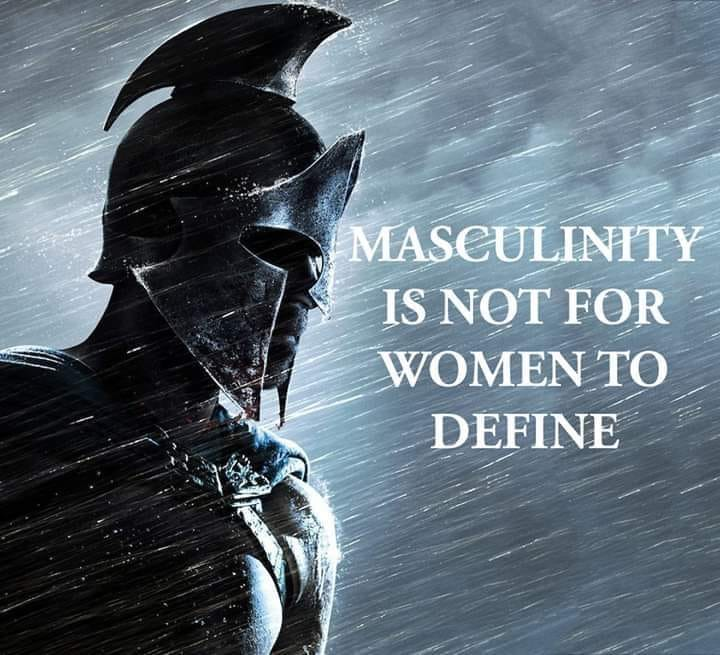
So, What is Masculinity?

Far from being toxic, masculinity encompasses positive traits vital for the growth of the self and society. At its core, masculinity refers to the unique qualities possessed by men. It does not imply any overall superiority/inferiority of a gender. Just as women have distinct attributes shaped by biology, men have capabilities and inclinations. Embracing these distinctions allows both genders to flourish.

Masculinity underscores virtues such as courage, leadership, protectorship, rationality, competitiveness, provision, and stoicism. Men often display analytical thinking, assertiveness, a penchant for adventure, risk-taking, and superior navigation skills. Across history, these traits empowered men as hunters, explorers, innovators, and warriors, with their physical strength proving indispensable for strenuous labor and defense.

Of course, men can exhibit feminine traits, and vice versa. However, men are naturally inclined towards masculinity as it aligns with their biological nature. Imposing societal expectations that discourage masculine expression leads to frustration and hampers progress.

Vital Societal Roles of Masculinity

Masculinity plays a crucial role, as men have historically fulfilled vital responsibilities. 

As protectors, they guided tribes and nations to safety. Male warriors defended borders, upheld justice, and safeguarded the vulnerable. Their physical strength and resilience make them well-suited for these tasks. Even today, in times of calamity, men continue to play crucial roles as first responders, firefighters, police officers, linemen, and emergency personnel. Their physical strength and courage are assets that prove invaluable in rescue missions and ensuring public safety. The historical legacy of men as protectors has seamlessly transitioned into the modern era, where their dedication to safeguarding communities remains evident.

Throughout history, men have been family providers, facing difficulty in ensuring sustenance and shelter. Their drive to succeed led to innovation, civilization development, and resource abundance. Even in the face of contemporary challenges, men continue to contribute significantly as builders, workers, and leaders. Their role in sustaining and advancing civilization persists, as they strive to meet the demands of a rapidly changing world. The resilience and determination that historically drove men to provide for their families now fuel their efforts to navigate complex societal issues and contribute to progress.

As fathers, men continue to shape the future by imparting essential values to the next generation. The qualities of honor, discipline, confidence, and perseverance that men exemplify are crucial for the development of well-rounded individuals. Studies consistently highlight the positive impact of involved fathers on children's growth, emphasizing the importance of masculine guidance, particularly for boys. In the absence of paternal influence, boys may face increased vulnerability to negative outcomes, underscoring the ongoing significance of men in shaping the trajectory of future generations.

In essence, men's roles in society have transcended the boundaries of time, adapting to the challenges of each era. Today, their contributions remain vital, as they continue to serve as protectors, providers, and influential figures in the development of resilient and thriving communities.

Dispelling Myths

Despite its necessity, masculinity is misunderstood. Myths suggest it promotes domineering attitudes, irresponsibility, violence, and chauvinism. However, authentic masculinity fosters the opposite. 

It is commonly believed that masculinity requires men to suppress their emotions and vulnerability. However, the truth is that masculine individuals experience a wide range of emotions but choose to display composure and self-control in public. They are selective about sharing their vulnerabilities to avoid being seen as weak in situations where showing weakness can lead to more problems.

Another common misconception suggests that masculinity leads to neglect of domestic responsibilities and a reluctance towards marriage and family. However, it is important to recognize that responsible fathers have always embodied true masculinity. Their commitment stems from a sense of duty, willingness to sacrifice, and deep care for their loved ones. Masculinity provides the strength needed to endure challenges and serve as a reliable foundation for the household.

Some argue that masculinity is associated with violence and aggression. However, unchecked aggression is not a trait of true masculinity but rather a sign of emotional immaturity. It can be correlated with being high on the neuroticism dimension of the Big Five personality factors. Interestingly, women tend to score higher on this particular dimension on average. Therefore, if a man lacks control over his emotions, he actually demonstrates less masculine behavior.

Many believe masculinity propagates the oppression of women. But properly understood, masculinity empowers both genders. Men's protectiveness and provision enable women to flourish and thrive in a safe and secure environment. True masculinity recognizes the inherent worth and capabilities of women and seeks to support and uplift them rather than oppress them.

Another misconception relates to the idea that masculinity is solely defined by physical strength and dominance. While physical attributes are a big part of masculinity, it is important to recognize that masculinity goes beyond physical strength. It involves qualities such as integrity, honor, resilience, and the capacity to lead with a firmness and boldness that need not be tied to physicality. Numerous studies have shown that embracing positive expressions of masculinity can have significant benefits for mental health. 

As these myths reveal, the vilification of masculinity relies on cherry-picking negative traits while ignoring the full picture. When grounded in virtue, masculinity catalyzes the best in men and society.

Threats to Masculinity 

Today, societal pressures discourage men’s masculine nature. Confusion about gender and attacks on masculinity compel men to suppress innate qualities, leading to melancholy and withdrawal.

Masculinity is condemned as patriarchal oppression, with terms like “toxic masculinity” assigning negative motives where none exist. The concept of male privilege and affirmative action imply men’s contributions are tainted, causing resentment.  

Popular culture denigrates masculinity by portraying men as bumbling fools, not inspirational heroes. Men are consistently ridiculed as uninspiring, incompetent, and immature. Even fathers are depicted as clueless and irresponsible. This inversion of gender norms mocks and weakens masculinity.

In school, environments discouraging competition and discipline demotivate boys. Reading materials and discussions cater more to girls. Society fails to provide meaningful rites of passage, giving participation trophies rather than earned achievements. Coddling boys rather than holding them accountable deprives them of the experiences needed to transition into purposeful, authentic masculinity.

Men often find themselves caught in a prolonged stage of adolescence rather than embracing true masculinity. They seek solace in activities like video games, pornography, substance abuse, and reckless behavior. Unfortunately, this lack of purpose leads to indifference and social isolation. Consequently, there is an increasing number of passive men who struggle with self-esteem issues and a sense of direction due to the absence of strong values.

Time to Reclaim Masculinity

In simpler terms, toxic masculinity, if it exists, can be seen as a diluted form of traditional masculinity in which boys and men do not fully embrace and develop the virtues of masculinity they inherently possess. 

The question then is how can boys and men become more masculine, free from the constraints of the myth of "toxic masculinity" created by feminists? The answer lies in not allowing these women to define what it means to be masculine. 

Boys and men should seek male role models who embody authentic masculinity, men who are physically strong but not bullies, assertive yet respectful, confident yet humble, stoic yet emotionally aware, disciplined yet open to possibilities, and seek to uphold virtues such as integrity, honor, and responsibility. 

By doing so, boys and men can reclaim their own narratives of masculinity and reject the notion that masculinity is some form of disease that they should suppress. There are toxic men as there are toxic women. Any toxic behavior exhibited by a man should not be automatically attributed to masculinity, exactly as it would be unfair to equate the toxic behavior of a woman to femininity in general.

In a world that readily acknowledges the achievements and struggles of women on International Women's Day, the silence surrounding International Men's Day speaks volumes. The prevailing bias against masculinity, perpetuated by societal misconceptions and misguided ideologies, undermines the genuine contributions of men. It is high time we challenge the narrative that associates masculinity with toxicity and oppression. By recognizing the positive qualities that define masculinity—courage, leadership, and resilience—we empower men to reclaim their narrative and break free from the constraints of toxic stereotypes.

International Men's Day should not be a day of silence but a day of celebration, acknowledging the invaluable roles men play as protectors, providers, and mentors. Let us move beyond the shadows of bias, dispel the myths surrounding masculinity, and embrace a future where both men and women are appreciated for their unique strengths, fostering a society that thrives on equality, understanding, and mutual respect.

Monday, September 11, 2023

The Tale of Two 9/11s: Honoring Loss, Inspiring Hope

It wouldn't be an exaggeration to say that the 9/11 terrorist attacks on the World Trade Center and the Pentagon impacted the psyche of America and the world in a way that very few other events have. The images of the two towers collapsing, the people fleeing in terror, and the devastation that was left in the wake of the attacks are burned into our collective memory. The 9/11 attacks were a shock and a wake-up call to the reality of Islamic terrorism in the Western world. Two decades later, these attacks continue to shape our world today. It's not that 9/11 was the first terrorist attack on America – it wasn't. But the scale and coordination of the attacks, as well as the brazenness of using commercial airliners as missiles, was on a level that no one had seen before. The destruction of the Twin Towers, in particular, was something that people couldn't wrap their heads around. For many, it felt like the world as they knew it had ended. 

In this short post, I would like to urge the world to remember a different 9/11, one that can help move the world away from the prejudice and hatred that fueled the 9/11 attacks. 9/11 is a historic day in world history not just because of the terrorist attacks but also because on this day in 1893, Swami Vivekananda gave his famous speech at the Parliament of the World's Religions in Chicago. This was a truly momentous event because it marked the first time that a Hindu monk had addressed a Western audience. Vivekananda, though initially nervous, bowed to Maa Saraswati -- the Hindu goddess of learning, and began his speech with "Sisters and brothers of America!" a common salutation (at least in India), but the authenticity with which he spoke those words struck such a chord with the 7000 plus audience that they gave him a standing ovation that lasted for over two minutes. This was an incredible feat, considering that, at the time, most people in the West knew very little about Hinduism and India.

In his speech, Vivekananda spoke about the unity of all religions and the need for religious tolerance. He said, "I am proud to belong to a religion which has taught the world both tolerance and universal acceptance. We believe not only in universal toleration, but we accept all religions as true. I am proud to belong to a nation which has sheltered the persecuted and the refugees of all religions and all nations of the earth."

Vivekananda's words ring even more true today in a world that is still reeling with religious hatred and intolerance that are rooted in supremacist religious ideologies. The 9/11 attacks were a brutal reminder of the consequences of such hatred. But, as we remember the innocent lives that were lost on that fateful day, let us also remember the words of Swami Vivekananda and recommit ourselves to building a world that is based on the Sanatana Dharma principles of respecting the dignity of all life, seeing the divinity in all beings, and working for the welfare of all irrespective of religious affiliation. Let us strive to create a world where supremacist religious ideologies cannot take root and fester. Instead, let us encourage a world where respect for pluralistic traditions and promoting religious tolerance are the norm. Only then can we hope to achieve true peace in our world.

It wouldn't be an exaggeration to say that Swami Vivekananda's speech at the 1893 Parliament of World Religions was a watershed moment in bringing Hinduism and India onto the global stage. At a time when few in the West knew anything about Hinduism, Vivekananda powerfully conveyed the spirit of universality that lies at the heart of India's ancient wisdom tradition. Just as the 9/11 attacks shaped the world we live in today, Vivekananda's historic address on that same date over a century ago impacted world history as well. His eloquent advocacy of religious tolerance and human fraternity resonates now more than ever in a world still struggling with religious divisions and strife. 

Two decades after the horrific 9/11 attacks, we would do well to keep Vivekananda's message alive. Those words of wisdom can serve as a guiding light as we work to heal divides, end prejudice, and build a more just and inclusive world order. Vivekananda's speech reminds us that when we recognize our shared humanity, embrace pluralism, and accept all faiths as true, we open the door to mutual understanding and cooperation. The road ahead requires perseverance and courage. But if we hold fast to these ideals, we can yet realize the dream of peace and harmony between all nations and peoples. The light of Vivekananda's universalist vision still shines brightly, helping illuminate the path forward even on the darkest of days.

Thursday, April 26, 2018

Asaram Bapu & the importance of blacklisting fake babas

Today morning I heard the news that Asaram Bapu got sentenced to life imprisonment by the Indian Court system for finding him guilty of raping a 16 year old girl in 2013. Asaram Bapu is the same criminal guru who had said that the 2012 Delhi gang rape victim, Nirbhaya, could have avoided being raped and killed had she addressed "the culprits as brothers and begged before them to stop."

I am delighted that the criminal Asaram Bapu was convicted and given the highest possible sentence possible for the crime. The court specifically ordered against giving him any respite, meaning that he will have to serve his life sentence until his death. Criminals should be prosecuted in the toughest way possible, irrespective of their religious and political affiliations. I think that the conviction of Asaram Bapu is a victory of the Indian judicial system, because it demonstrates that it doesn't get easily influenced by pressure groups. More importantly, this is a triumph for the courageous girl, her family and everyone else who fought hard against the criminal baba.

I realize that some of the readers of my post may come from families who once trusted and followed the disgraced guru. When the allegations surfaced for the first time, they may have even doubted the rape victim. And this is understandable, because unfortunately false rape allegations do happen in this world. Also, when we don't have access to all the relevant facts of the case, it is sensible to give the benefit-of-doubt to the person whom we have trusted and respected for a long time. However, we should definitely stop supporting a person once the impartial court system has found him guilty. Thankfully, I haven't seen a single Indian, including the Hindus, expressing dissatisfaction with respect to the court's verdict (except the culprit's lawyer, of course). 

According to me, the Hindus have always been pretty good at denouncing unscrupulous babas, probably because the traditions of Hinduism have always emphasized individual seeking over collectivistic conformity. That is the reason there is no punishment for apostasy in Hinduism. And that is also the reason why Hindus may find it easier to speak up against a religious leader whom they suspect to be corrupt. However, the human psyche is weak, so the temptation to find succour in charismatic cult leaders is always there. Last year the Akhil Bharatiya Akhara Parishad (ABAP), an apex organisation of Hindu Sants (saints) and Sadhus (ascetics) in India took a step in this regard by publishing a list of fake babas in India. Specifically, they blacklisted 17 fake babas, including Asaram Bapu. I hope ABAP continues publishing such lists every year to make sure that innocent people don't fall victim to the traps of these monsters.

Some of the fake babas who have been blacklisted
However, what should not be done is the shaming of the followers of these babas, because except for a few core members, the majority of the followers of these babas are innocent people who are completely oblivious of their misdeeds. I think even most politicians who share stage with these babas are likely to be unaware of their criminal activities. That is the reason I don't blame either the Congress, National Conference, or BJP politicians who in the past had shared stage with Asaram Bapu. Unfortunately, leftist media personalities, such as Vinod Dua, only highlighted the BJP politicians who had shared the stage with Asaram Bapu. Further in the same video commentary,  Vinod Dua attempts to create the false impression that sexual abuse happens only within the Hindu religious organizations, although again, this should not be surprising given the strong leftist bias of our media houses. But that is a topic for another discussion.

...To be continued.

Sunday, November 20, 2016

Remembering Dr. Reeta Peshawaria: Secrets of Personal Influence

With Dr. Reeta Peshawaria, Dr. D.K. Menon and my undergrad classmates
Yesterday was the birth anniversary of Late Dr. Reeta Peshawaria, the most influential teacher I have had so far in my life. And I have had the rare fortune of being taught by many extraordinary teachers. Some of these teachers are not only respected within their immediate student community but are also counted among the most influential researchers in the world. I learnt a lot from all these teachers. Whatever skills and goodness I have in me today, a large part of it was shaped by these exceptional teachers with the largest contribution made by Reeta Ma'am (as she was called fondly by her students). Today's post is my humble homage to this great teacher.

Frankly, I was a little hesitant to write this homage, because I felt inadequate to explain the greatness of this great person. Also, to highlight just three of her qualities--which I intend to do here--seemed like an injustice to the multifarious personality that she was. Yet, I decided to engage in this process because identifying the important qualities of success in others is a significant step in the direction of building the same qualities within oneself. According to me, the three qualities that made Reeta Ma'am such a great teacher and leader are her passion, humility and care.

Passion

Everything that Reeta Ma'am did, she did it with passion, be it teaching, conducting research, seeing people with disabilities (PWD) in the clinic, or counseling family members of PWDs. And the evidence that she was passionate about her work was the immense amount of positive energy she brought to work.

Probably there isn't a single adult in this world who hasn't heard about the importance of being passionate. So much so that it's almost clichéd to talk about it. Yet, in my experience, high levels of passion for one's work/profession is pretty rare. Most people--even hard working people--go about doing their jobs without much enthusiasm. For these people, their job is just a means of earning their livelihood, but there is no life in their jobs.

"If you don't have the equivalent of a child's excitement for play or a young adult's excitement for sex, then your passion has a lot of room to improve."

You may think that you are not such a passionless person, and you might be right. However, if you don't have the equivalent of a child's excitement for play or a young adult's excitement for sex, then your passion has a lot of room to improve. Nothing worthwhile in this world is created without passion (including bringing children into this world). The best teachers I have had were all super-passionate about their subject and teaching.

"Anything worth doing, is worth doing with passion."

What makes Reeta Ma'am's passion even more remarkable to me is that Behavior Modification--the topic that she taught--is an antithesis of intrinsic motivation concepts such as passion. Behavior modification (or Applied Behavior Analysis, as it is known now) is the application of reinforcement principles to increase desirable behaviors and reduce undesirable behaviors among children and people. In other words, what Reeta Ma'am taught us was how to effectively use different extrinsic rewards and punishments to change the behaviors of PWDs. Yet, paradoxically, neither did she need any extrinsic rewards to be motivated about her work, nor did she have to rely on extrinsic rewards and punishments to get us students excited about Behavior Modification. She was intrinsically motivated to learn, master and teach the methods of behavior modification so that she could make a difference in the lives PWDs and their families. We students got excited about behavior modification not because of any extrinsic rewards but because her passion and intrinsic motivation rubbed off on us. So the first lesson that I take from Reeta Ma'am's life is that anything worth doing, is worth doing with passion.

Humility

In our so called "modern" culture, the importance of being confident is overemphasized. For example, a simple Google search of "improving confidence" today yielded me 169,000,000 results. In contrast, searching for "improving humility" only yielded me 593,000 results. If these results are any indication, we seem to give 285 times more importance to being confident than to being humble.

Humility is not false modesty. For example (and this is a real example), it is not calling yourself a शिक्षित बेरोजगार (or an educated-unemployed person), when you are a published author of three books who writes regularly for reputed newspapers and magazines. Humility is also not about being submissive. Humility is having the constant awareness that you don't know it all. Humility is having the openness to learn from everyone, even those who are less successful than you. Humility is knowing that you are not above--or below--other people.

Students of Reeta Ma'am will remember she taught us about assertiveness. Assertiveness refers to behaving in a manner that is self-assured and confident but not rude or aggressive. Reeta Ma'am herself was an assertive person. In fact, she was known for her assertiveness. She did not hesitate to speak her mind, but always did so respectfully. She demanded high standards of performance from everyone, including her students and her staff. And I greatly admired Reeta Ma'am's assertiveness, and personally strove to be assertive myself.

However, drawing the line between assertiveness and aggressiveness is not always easy. That's why assertiveness sometimes alienates people. You may win an argument with your assertiveness, but you will find it difficult to win over people with it. This does not mean that one should not be assertive. One should certainly stand up for one's convictions. However, assertiveness alone can be pretty ineffective a tool. According to me, what made Reeta Ma'am effective was not her assertiveness per se, but the paradoxical combination of assertiveness and humility that she possessed. While she pushed hard for what she believed in, she didn't pretend to know it all. Although we were just undergraduate students, I found her open to our ideas and suggestions. She really listened to us. And that's what made us want to follow her.

"Humility is much more important and powerful than being self-confident."

Reeta Ma'am taught me many powerful concepts, theories and techniques, but these things alone would have made me a cocky, know-it-all guy. My love for learning got enhanced only because of the humility with which she showed that she did not have all the answers and that there was a lot more to learn. So humility, according to me, is much more important and powerful than confidence. However, it's beyond the scope of this article to talk about all the powers of humility. So I will just narrate an incident that illustrates how even very accomplished individuals are very humble. Or perhaps it is their humility that made them so successful.

The incident I am referring to happened with Dr. Kiran Bedi, the current Lt. Governor of Puducherry, and also the elder sister of Reeta Ma'am. Yes, looks like humility runs in their family. In June this year, my colleague Dr. Rama Cousik and I traveled to Puducherry to receive the Reeta Peshawaria-Menon Fellowship Award 2016 from Dr. Bedi. We had, of course, learnt about our award this same day last year, but we could physically receive the award only in June when we both were in India. The award ceremony was organized at the Raj Bhavan. The place was filled with many senior bureaucrats and police officers. At the award ceremony, I touched the feet of Dr. Bedi (for those unfamiliar with this Indian tradition, this is a gesture of respect). Now there is nothing surprising about me bowing down to Dr. Bedi; she has been one of the most powerful role models for the people of India (including me) since the 1970s. But what happened next truly shocked and humbled me. Immediately after I had touched Dr. Bedi's feet, she bowed down too and touched my feet. In the eyes of the honorable Lt. Governor, I was no less a person than her. Now that is humility!

Receiving the Reeta Peshawaria-Menon Fellowship Award from Dr. Kiran Bedi

Care

Passion and humility were great qualities that Reeta Ma'am had, but I think the biggest reason she made such a huge difference in my life (and many others) is because she truly cared. Although an undergraduate student of Reeta Ma'am, I sought out opportunities of engaging in academic discussions with her on different topics. I did so because I was passionate about certain topics of psychology. I wanted her expert insights on those topics so that I could get more clarity about them. Reeta Ma'am was very generous in giving her otherwise limited time to me. She also patiently listened to my ideas on those topics. Of course at that point of time, I felt like my thoughts and ideas were super-genius, but now with a little more knowledge and wisdom, I know that they were almost always poorly developed and sometimes downright lame. Yet, Reeta Ma'am was never dismissive of my ideas. She gently encouraged me to continue to think and helped refine my thinking process.

When you truly care for somebody, you do everything in your capacity to help in the growth of that person. Care comes from a position of love, not very different from the love that a mother has for her infant. Care is not a moral discourse on what is the right thing to do. Care is wanting to do the right things because you care so much for that person. To care is to develop and nurture a relationship. To care is to be present. To care is to feel a sense of responsibility towards others.

"Care is not a moral discourse on what is the right thing to do, but wanting to do the right thing."

The teachers (and leaders) whom I have wholeheartedly followed were not necessarily the most brilliant (although most were), but they were definitely people who cared for my welfare and well-being. In today's age and date, where personal ambition often takes precedence over everything else, we are ceasing to truly care for people. We start seeing human beings as a collection of resources with knowledge, skills, talents, experience, etc. who could be used to attain our personal goals. Or worse, we see them as hindrances in our path of success. We forget that they are human beings first. We forget that we would have never made it to where we are today without the love and care that we received from certain people in our lives.

That said, I realize that to care is difficult. It is difficult the same way as it is difficult for a mother to take care of her kid. To care for somebody means that we have to be willing invest our time and energy for that person. To care for somebody means willing to make a few personal sacrifices. These are the lessons I learnt from Reeta Ma'am, not because she taught me those lessons explicitly, but because she lived the ideals she perhaps wanted inculcated in me. We are more likely to follow a person for who s/he is rather than for what s/he says. So the biggest lesson that I take from Reeta Ma'am's life is to operate from an ethic of care, because that is the only way I can repay the care I received from her and other caring people in my life.

Saturday, January 16, 2016

Reflections from Africa

This post is about people, more specifically about people who energize you and get you excited about your work and life even when you meet them for the very first time. The post itself is coming a week late, but I am happy that I at least kept the promise that I had made to myself about writing a post every week. I wrote most of this post last weekend; I just could not publish it then because I didn’t have access to internet. First, the hotel I was staying at in Nairobi lost internet connection for three days, supposedly due to some problems in the fiber optic cable. And then after reaching home in India, it took me a few days to get internet installed at my home.

So yes, last week I was in Nairobi, Kenya to present a paper at the African Academy of Management (AFAM) conference that I had written in collaboration with my former student, Dr. Saneta Maiko, who is now a researcher at Indiana University Health, Indianapolis. Our paper was received extremely well, and spurred a lot of discussion. My presentation of 20 minutes was followed by over 30 minutes of Q&A. If you are familiar with the formats at most academic conferences, it is pretty rare to see the Q&A go for such long period. So I was gratified to see the enthusiasm around our paper. If you are curious about our paper, it discussed a non-traditional approach of teaching ethics to management and leadership students by helping connect the students with the community and environment so that the students start caring about them. Anyway, I am digressing here, because I want to primarily talk about some of the very cool people I met at the conference.

I always love presenting at international conferences, not just because one gets to visit some new places but also because one gets to interact with and learn from scholars from different corners of the world. I have met some very cool people at these conferences, a few of whom have gone on to become very good friends in my life. At the AFAM conference also I had the opportunity to interact with some very knowledgeable and warm people. I won’t bore you by giving a detailed narration about each one of them, but I would like to share about two people who made strong impression on me.

The first person I would like to talk about is Dr. Jenny Hoobler who is a professor of management at the University of Pretoria. She was also the track chair of Organizational Behavior at the conference. We ended up at quite a few of the same sessions and got to know each other well. What I appreciated a lot about her is that she had a real knack of always finding something very positive about each presentation that she attended (even when they were not so great). She made sure to give this positive feedback to the presenters during the Q&A. Most importantly, the positive feedback that she provided was not a hackneyed formality but very genuine. This was in stark contrast to the comments that I noticed from some others--especially doctoral students--who seemed out to prove their own knowledge and expertise when they asked their questions during the Q&A sessions instead of providing constructive feedback. To me this seemed like a good example of the "empty vessels make the most sound" proverb that is common in India. In my experience, the really knowledgeable people usually tend to be very humble and generous. In contrast, the ignorant and the neophytes are the ones who tend to be arrogant and unkind. Or may be it is not a case of knowledge versus ignorance. Rephrasing Mark Twain, it's not so much what we don't know that is the problem; "it is what we know for sure that just ain't so." By the way, this is what Dr. Hoobler had to say on my presentation:

"I just want to say that I felt such an ethics of care from you."

Another person in the audience joined in, "Exactly!"

"And I have had the interactions with you over email as the OB Division Chair. And you were so helpful and warm, and I felt like, “Wow! I would love to have a business professor like him. So thank you for being such a …”

With immense humility she went on, "I feel I don’t do well when it comes to teaching ethics. I just go through all the theories. I present it all, and it’s neutral. It’s then up to the students to sort of pick. And I have felt inadequate in that regard. So I want to underscore your point about self-reflection…”


The second person I would like to talk about is Dr. Sue Canney Davison, a British-born, Oxford University graduate, who has settled down in Kenya after marrying a Kenyan. Incidentally, she spoke fluent Hindi as well because of having lived in Himanchal Pradesh for over a decade during her twenties. Sue had some excellent suggestions on our paper as well, and also recommended a book published from Africa that she thought would be beneficial while I worked on developing my paper. But those aren't the reason I am talking about her here. The reason she made an impression is because I ran into her again at the closing ceremony of the conference. She excitedly said that she had brought the book that she had recommended to me the previous day so that I would get a chance to look at it. That's how I did get a chance to browse through that book. Since I was leaving the next day (a Sunday when all major shops are closed), she even offered to buy and send me a copy of that book because it would be difficult for me to find that book outside Africa. Now that's a clear sign of a person who really cares.

Lastly, a few words about Kenya. I was there for just three and half days. So I didn’t really visit much of Kenya. My initial intention was to spend at least a week to 10 days in Kenya, go on a long safari tour and climb Mt. Kenya. But then I had to change my plans to attend to some family emergencies at home. But I hope to be able to come back to Africa again to fulfill my dream of climbing Mt. Kilimanjaro/ Mt. Kenya, go on a safari tour of the Maasai Mara National Park, and if time coincides, even run a marathon with the Kenyans.


An afternoon siesta on the tree

Seeing the giraffe move gracefully despite the long neck was a pleasure

Another long neck creature, though I had seen ostriches before

An antelope grazing

I saw this beauty on a thorny tree next to a barbed wire fence

Women carrying firewood from the forest

Tribal huts at the Bomas of Kenya

The roof of a tribal hut

Another hut

And another, all from different Kenya tribes

The tribal dances at the Bomas of Kenya were superb

A wooden sculpture of an old man in front of a tin hut

Ready for a dance in the Maasai attire at the closing ceremony of the African Academy of Management conference.
Thanks to Sam (the person next to me) for helping me put on the attire!

Maasai dance with Sue

Sunday, July 20, 2014

The Remains of the Day

As most of my friends know, I love reading. Of course, a large part of my reading is academic, but I also read a lot of books. The books that I mostly read will be categorized as non-fiction. I rarely pick up a fiction, and only if it is strongly recommended by a person whose taste and judgment of books I value. You might wonder why I do not read as many fictions as I read non-fictions. I have thought about that question myself and have come to the conclusion that I value ideas more than stories. This is not to deny the power of stories. In fact, some of the best non-fictions that I have read had very strong narratives. However, to me, reading fictions just for pleasure seems like an indulgence that I cannot afford given the limited time that one is left with after devoting oneself to life’s other passions. That said, when I do come across a great work of fiction, I have to admit that the ideas embedded in the book, tend to make a very deep connection.

This summer I have read many books, again many more non-fictions than fictions, but the fiction that I finished this weekend, The Remains of the Day by Kazuo Ishiguro, is the best work of fiction that I have read so far on my break. For those who value award winning books, Ishiguro won the 1989 Booker prize winner for The Remains of the Day. Ishiguro, a Japanese born British novelist, has written many other highly praised novels though this is the first time I read his work. Written in first-person narrative, The Remains of the Day is the story of an English butler named Stevens who is a thorough professional and has dedicated his entire life to becoming a “great” butler.

Stevens' reflection on what makes for a great butler—or for that matter a great professional in any other field—is truly inspiring. He observes that great butlers are not necessarily the most reputed ones. Stevens seems to be acutely aware of the ephemerality of fame: “How often have you known it for the butler who is on everyone’s lips one day as the greatest of his generation to be proved demonstrably within a few years to have been nothing of the sort? And yet those very same employees who once heaped praise on him will be too busy eulogizing some new figure to stop and examine their sense of judgement.” According to Stevens, the factor that distinguishes the truly ‘great’ butlers from the ‘merely extremely competent’ ones is best summarized by the word ‘dignity’. To avoid revealing too much about the book, I will not elaborate on what Stevens exactly means by dignity. However, you will appreciate that his views are not shallow when he disagrees with the view taken by another butler that “‘dignity’ was something like a woman’s beauty and it was thus pointless to attempt to analyse it." Stevens thinks such a view of dignity is demeaning. He argues that comparing dignity with a woman’s beauty meant that “‘dignity’ was something one possessed or did not by fluke of nature; and if one did not self-evidently have it, to strive after it would be as futile as an ugly woman trying to make herself beautiful. …I believe strongly that this ‘dignity’ is something one can meaningfully strive for throughout one’s career.”

The view taken here by Stevens is what we researchers call the ‘incremental’ view of abilities, according to which our abilities are malleable and can be developed with practice. People who hold such an ‘incremental’—as opposed to the ‘entity’ view where people believe that abilities are fixed and you either have it or you don’t—tend to be much more happy and successful in the long run. In the end, it is this ‘incremental’ view or ‘learning' orientation to life that ultimately helps Stevens cope with the challenges that he encounters later in his life without getting sucked into a life of regret and despair.

I personally am a very different person than the character of Stevens in The Remains of the Day. For example, my level of Conscientiousness is nowhere as close to the extreme levels that Stevens possessed, and I will score many times higher than Stevens on the dimension of Openness to Experience. Nonetheless, there were many valuable lessons that I learnt from the protagonist’s actions and reflections in The Remains of the Day; that ultimately makes for a great fiction, in my view.

Friday, March 2, 2012

Dealing with Abuse

I was talking to a friend today. She was upset. She was upset because one of her professors had made himself the first author on a conference paper that was the direct outcome of her dissertation. Naturally, she felt betrayed by this person whom she trusted and respected. Not surprisingly, the abuse of power by her professor also made her question her own self-efficacy as a researcher. She wondered if she really had what was needed to be a successful researcher.

Unfortunately, abuse of power and trust are facts of life. These are things that we wish we and our loved ones never encountered in life. But then you cannot wish problems away. Inevitably, we all encounter betrayals in one form or another. Sometimes the betrayals are so severe that they scar us for our entire lives, as happens in cases of sexual abuse. For example, today I was reading a recent New York Times article which described the case of a 50 year old woman for whom it took about 25 years to unequivocally acknowledge the fact that what her yoga guru had done to her was nothing but sexual abuse. During all these years, she was questioning herself and rationalizing her guru's actions.

Abuse of trust is always a devastating experience for the victim. You start questioning yourself. "How could I be so stupid as to trust this individual? How could I not see this coming?" All those years of admiration, trust and devotion appear to be misplaced. This can be so painful that the alternative of rationalizing and justifying the perpetrator's actions seem more alluring. And so, depending on the nature of abuse, it may take anywhere from weeks to years to come to complete terms with it. The point is to not blame, but to call a spade a spade. Only when we accept an incident of abuse as it is, can we move forward with our life. Otherwise, we get stuck in a rut bouncing between self-blame and other-blame.

Worse, we may even become cynical about the entire world. "There is no good in being nice and honest," is the feeling. It seems like being nice doesn't take you anywhere, whereas the manipulative, heartless, machiavellians and narcissists appear to be going places. Such thinking may seem natural, but is very maladaptive and self-defeating. Whenever traces of cynicism enter my system, I always try to remind myself, "Paresh, if you have come this far being good, nice, and trusting, these qualities can't be that bad." We don't have to change our personality and values, just because some person betrayed our trust. If it's feasible, we may confront the person. If not, we don't. However, we should continue to stay steadfast on our life's path, being not just good, but also wise and strong from our experience. After all, we gain wisdom and strength not from our successes, but from the setbacks of our life.

Thursday, March 18, 2010

Deliciously Sustainable


It happened about a month ago. As I do on most evenings, I walked over to my friend Rama's place to hang out, and play with her dog Maggie. Usually my friend's house is very clean, but on that particular day strands of hay were strewn all over her living room. She and her husband had just moved in a bale of hay from Lowe's. My friend was sitting on the floor hunching over a wicker basket, twisting small bunches of hay, and placing them inside the basket. As I entered the room, she turned towards me and gave me an excited smile, the kind of smile that you rarely see in adults. It was the kind of radiant smile that you see in young kids when they are engaged in some kind of creative play, like building a castle out of dirt, for instance. It was obvious that my creative friend was again up to something, but what? She asked if I could guess what she was making. I first thought may be it was some kind of shelter for Maggie to keep her warm in the winter, but then the basket seemed too small for her. Or may be it was some new art idea that she had come up with, but what exactly was she making? I could not think of anything. I gave up. Keeping me under suspense, she said I better wait and watch then. So I waited, saw the product taking shape in front of my eyes, and finally tasted the absolutely delicious rice that she prepared with it.

My friend is a great cook, but never before had her rice tasted so good. It was the best tasting rice I had had in a very long time, and its texture was perfect. The rice tasted so good, I felt like I could eat a lot of it even without the help of any side dish. In some strange way, the hay box had transformed regular rice into a delicacy. My friend had prepared a cooker out of hay and the wicker basket. I could not believe that a cooker which seemed so rural and primitive could prepare such tasty rice. And then I remembered the sheer delicacies which my mother, grandmother, and great-grandmother prepared using the so called "primitive" methods of cooking. I realized nothing beats the old, slow methods of cooking. And here was a technology which allowed slow cooking without the extra-energy demands that usually involve slow cooking.

The principle was very simple. To cook the rice my friend brought rice to a boiling point on a regular stove. Then she turned off the stove and moved the hot vessel containing the boiling rice into the wicker basket that was lined with a thick layer of hay on all sides. She covered the vessel with its lid, and then placed on top of it another lid made out of hay. Basically the vessel was covered on all sides with hay. Hay being an excellent insulator trapped the heat that was there in the vessel, and made the rice cook in its own heat within 40 minutes.

My friend got her idea about the hay cooker from a video she watched on AID's (Association for India's Development) website. Many of my friends in Bloomington volunteer for AID. Surely, many AID members in US must have seen the video, but no one ever thought of preparing a hay cooker here in US. Because the hay cooker was being promoted in a rural village in India, it must have seemed like a rural thing that was not applicable in the context of a developed country like the USA. But my friend saw beyond the context, and with support of her husband had just succeeded in her experimentation with the hay cooker. The proof of the brilliant success of the cooker was of course the yummy rice on our plates.

Now my friend regularly cooks in her hay cooker, and not just rice but a wide variety of dishes. I have attached a few pictures of some of the delicious dishes she has prepared in her hay cooker. Because of the initiative taken by her, a lot of people in Bloomington have now got excited about the hay cooker. You too can try it in your own home!!

Benefits of the Hay Cooker:
  1. It saves energy. Stove time is reduced by approximately 60-70%. That makes it very environment friendly.
  2. Save money. Because you save energy, you automatically save on electricity/cooking gas bill.
  3. Cooks tasty and nutritious food. There is very minimal loss of nutrients in the hay cooker. Contrast this to the traditional cooking where a lot of nutrients get lost in steam. The slow cooking of the hay cooker prevents loss of the natural nutrients in food. This is probably what makes the food cooked in hay cooker so tasty.
  4. Serves hot food anytime. This is one of the best benefits of the hay cooker. If you leave the hot food vessel inside the hay cooker, it will keep the food hot for about 6-8 hours. All this without additional electricity. In other words, you can eat hot fresh food anytime without having to put your food in the refrigerator and then microwaving it.
  5. No burning or overcooking. You can burn your food in the traditional cooking method if you forget to turn off your stove on time, but it is impossible to burn your food while using the hay cooker.


Wednesday, May 13, 2009

Hopelessly Hopeful

Research indicates many of our hopes are actually 'false hopes.' At different points in life, we have all attempted to change something about ourselves and failed. It could be instances of trying to lose weight, quit smoking, workout regularly, start running, study regularly, or something else. Most of us have all made New Year's resolutions and failed to keep them. Most likely we all started working on improving our lives with great enthusiasm. We may have even achieved intial success in changing ourselves, but then something happened (or didn't happen) and we relapsed to our poor old selveswe failed. Research indicates that people tend to make the same resolutions year after year, vowing on average 10 times to eradicate a particular vice. A very small percentage of people succeed in attempts of self-change, and those who do, do so only after an average of five to six times of failure. In other words, according to some research, the high hopes we harbor about bringing about great positive changes in ourselves may all actually be false hopes. We continue to make the same resolution year after year, obviously because our past attempts failed. Yet, we are often oblivious to these failuresor at least, don't factor them while estimating the likelihood of our successand believe we can change ourselves.

Even when we improve, our improvement is often very temporary. Take dieting for example: In a study, researchers found that about a third of patients regained weight within a year of losing it, about two-thirds regained it within three years, and 80% to 90% regained it in five years. Weight is fortunately not a problem for me (yet), but the general arguments about false hopes makes me wonder if all (or majority of) our hopes are really false hopes. What do you think? Are all our dreams actually mirages? Are we all chasing mirages?

If changing ourselves is so difficult, imagine how difficult or impossible it would be to change a society or a nation. Today I watched an interview of the Dalai Lama on CNN.com. In response to a question by Fareed Zakaria about how hopeful he was about the resolution of the Tibet issue, the Dalai Lama said, "When we look Tibet issue locally... then [it is] hopeless. [However,] if we look Tibet issue from a wider perspective, I feel much hope." These words from the Dalai Lama got stuck with me. I wondered, "How can the Dalai Lama be hopeful, when the Chinese government's power and aggressive posturing on Tibet has been increasing continuously over several decades?" After some thought I realized that what the Dalai Lama said about Tibet is actually applicable to all areas of our lives. Things seem hopeless only when we see things from a narrow perspective; from a broader perspective, even the most hopeless situation can be very hopeful.

Going back to the research studies I discussed earlier, the findings seemed depressing because the researchers saw the problem from a narrow perspective. Technically, those studies had a within-subjects design, i.e., the effect of a particular treatment (viz., diet or resolution) was measured by how subjects did before and after the treatment. In almost all cases, subjects trying to lose weight regained the weight they lostthis then became the argument and evidence for false hopes. A broader perspective of looking at the same problem would have been comparing dieters with non-dieters, or comparing the (false) hopeful dieters with those who were not optimisticbetween-subjects designs. I am positive a marked difference would be found between these two groups of people on health parameters. The dieters may have regained the weight they lost, but their hope and optimism would ensure that they would have significantly less negative health indicators (e.g., level of bad cholesterol, etc.) than those who don't even try because of less hope. I would bet that the dietersdespite their failure in maintaining a weight losswould have significantly longer life span than those obese people who never tried to change.

In summary, my point is that it is ok to have false hopes. False hopes may lead to disappointment, but even in the disappointment we move far ahead than what we would have without harboring any hopes. Not having any hopes would mean living a life of despairwe know that such negative emotions suppress the immune system. So, let's live a life of hopeeven if it may be false hopebecause feelings of hope bring smiles to our faces. It allows us to enjoy life and laugh freely. Let's fail ten thousand times and still be hopeful like Thomas Edison, "I have not failed. I have just found 10,000 ways that won't work." Success and happiness, I believe, are always filled with hope.

Sunday, February 15, 2009

Getting rid of Valentine's Day

India is a land of many controversieslove, or more specifically the expression of it, is one of them. Fundamentalist groups of different religionssuch as the Ram Sena in Mangalore and Dukhtaran-e-Millat in Jammu & Kashmir—have created a huge hue and cry about the inappropriateness of celebrating Valentine's Day in India.

I didn't care much about Valentine's Day. Frankly, I didn't even know that there existed something called Valentine's Day until the mid 90s when I went to Hyderabad for my Bachelor's degree. Since I was very good with general knowledge (GK) and regularly won prizes in GK competitions at school, I think I'll attribute my childhood ignorance about Valentine's Day to it not being a major part of Indian culture until the 90s. As far as my understanding goes, Valentine's day became popular in India only during the 90s with the onset of cable television and after the Indian economy opened itself up to the outside world. Many people sure must have been celebrating Valentine's day prior to the 90s but I guess it must have been an affair only amongst the urban elite.

The commercialization of love with Valentine's day cards, gifts, roses and red balloons surely turns many people off. The people who are put off includes not just religious fundamentalists like Pramod Muthalik (Sri Ram Sena's chief) and Asiya Andrabi (the leader of Dukhtaran-e-Millat), but also liberal citizens in India and the West. A commercialization that creates pressure on people to gift a dozen roses as if one rose meant less or inferior love, is something that should be deplored. But that does not give anyone the right to be violent with anyone. So when I hear news about religious fundamentalists in India harassing young couples on Valentine's day, I feel violated. I get mad when Asiya Andrabi's group threatened to throw acid on women who celebrate Valentine's day and don't wear burkhas in Kashmir. I get mad when I learn about incidents of Hindu goons going on a street rampage, harassing young couples, and destroying property.

I may not have been much of a Valentine's Day celebrator, but I don't think there is anything immoral with Valentine's Day celebration either; it's after all a festival of love—the same love that is epitomized in the shringar ras of Lord Krishna. Valentine's Day per se may have been alien to India, but the emotion of love is not. For that matter, even the so called dirty word "sex" is part of our rich Indian heritage. We are the land of the kamasutra. I know of no other country and no other religion where places of worship have explicit depiction of sexual positions.

Come on Mr. Muthalik, let's celebrate love. Let's celebrate love making. It is the core of being Indian—after all we did not become over a billion strong just out of thin air. I guess you (and your likes) are not upset with love and sex, but with the Western connection of Valentine's day. Now, that's fine, but don't get violent because of that—by doing so you are only alienating people who would otherwise have been your staunch supporters. For example, I am not in favor of the propagation of the pub culture and would support campaigns that discourage alcohol consumption among youth. However, you and your organization members have pissed me off very badly by, because of attacking and harassing pub goers in Mangalore. In fact, your despicable acts has pissed me so much that I was a Valentine's day enthusiast this year. I distributed chocolates to all my friends whom I met on Valentine's day. Unfortunately, I didn't have my Valentine around me, but if I did I would have painted the whole town red.

Yes, Mr. Muthalik you are succeeding in converting people, but only in the opposite direction of what you intended. By coercing and threatening people with violence, you are only creating a rebellious generation. That is the only reason, you were the recipient of thousands of pink chaddies (panties) this Valentine's day. You may have returned the chaddies with pink sarees, but what would you do if you received soiled and sperm stained chaddies next time?

If you really want to get rid of Valentine's day, why don't you use something more intelligent and less coercive? For a start, you could change the name of Valentine's day to (say) Kishen Kanhaiya Day—after all changing Western names to Indian ones has been the core responsibility for Indian politicians in the last decade. If Victoria Terminal could become Chatrapati Shivaji Terminal, why cannot Valentine's Day become Kishen Kanhaiya Day? You may not be a politician, but you could campaign for such name changes, and politicians would be happy to oblige. And you know what, you could spend your supporters' money in collaborating with an advertising agency that will make the Krishna's color of blue as hip as red. For all you know, Pepsi may sponsor your campaign for a blue makeover of Valentine's day and you won't have to depend on street ruffians to collect money for you. Now don't think I'm just making fun of you (and the Indian politcians) by giving such bizarre suggestions—of course, I am making fun of all of you, but there is a note of seriousness in it as well. You can change people only through persuasion, not through coercion. Even the bizarrest and and seemingly stupid attempts of persuasion are better than acts of coercion, harassment or violence.

Wednesday, November 19, 2008

Modi Operandi

Today, I watched an interesting news clip about Narendra Modi's government in Gujurat. The news clip basically described public anger towards Modi. Why were the people angry towards Modi - the person whom they had elected with thumping majority just a year ago? People were upset because Modi had initiated the demolition of over 200 temples in Gujurat that were illegal encroachments. Narendra Modi, as you all know, is a leader of the Bharatiya Janata Party - a party that is associated with Hindu nationalism. He was also the person whom the media had criticized severely for its alleged tacit involvement in the 2002 post-Godhra riots in Gujurat against the Muslims. Thus, I was surprised when I came across the news of Modi leading a drive to demolish illegally constructed temples. I wondered, "How can a leader who is supposedly a fundamentalist Hindu, order a drive to demolish temples?" "The temples may have been illegal constructions, but don't political leaders in India just cater to their vote banks?" I realize Hindus in Gujurat are very upset about the demolitions, but I am happy that a leader who identifies himself as a Hindu nationalist, did not hesitate to tear down Hindu temples that were encroaching upon public property.

I often hear politicians blaming each other for playing petty partisan politics; yet, rarely do we see any of them taking any strong action against their own supporters that are violating rules and regulations. Instead, we always see them protecting and justifying the actions of their constituents. I hope more leaders go beyond trying to appease their vote banks, and start focusing on maintaining the law of the land. Instead of acting based on how well their actions help in the acquisition and sustenance of power, I hope leaders do not hesitate to take the 'right' actions that even alienates them from their voters. I guess leaders feel insecured taking unpopular actions, however, focusing on doing the 'right' thing always pays back in the long run.

Friday, September 19, 2008

Mistakes, Lies & Justifications

"A great nation is like a great man:
When he makes a mistake, he realizes it.
Having realized it, he admits it.
Having admitted it, he corrects it.
He considers those who point out his faults as his most benevolent teachers." - Lao Tzu
To err is human, and so is our tendency to hide mistakes. When we commit mistakes that are immoral or harmful, we often try to hide them, or lie about them - this is usually an attempt to avoid getting into trouble with our parents, partners, teachers, bosses, and even followers. Sometimes we even defend our actions publicly, just to save our face. The worst situation, however, is when we justify our mistakes, not just to the outside world but to ourselves. Self-justification causes the biggest harm, because we become oblivious of our own mistakes. By not realizing our mistakes, we lose all opportunities to learn from the mistakes we committed; not just that, we often escalate our commitment into those erroneous courses of action. The net result is that we turn into "unconscious hypocrites" - we talk about the mistakes which others commit but fail to realize the exact similar ones that we are committing ourselves.