Showing posts with label Culture. Show all posts

Sunday, November 19, 2023

Reclaiming Masculinity: A Reflection on International Men's Day

Today (November 19th) is International Men's Day, a day that goes completely unnoticed in the media and society as a whole. Contrast it with International Women's Day on March 8th, which is widely recognized and celebrated around the world to honor women's accomplishments and contributions. Every year on that day, my social media feeds get inundated with posts commemorating women, bringing attention to the challenges they face and applauding their strength and accomplishments.  

I have no objections to the recognition given to women. And why would I? I have numerous cherished female loved ones in my life—from my mother, sisters, and nieces to teachers, colleagues, and close friends—all of whom contribute immensely to my life as well as others. They genuinely deserve every bit of attention they receive on that day and beyond.

However, the stark contrast between the two days begs the question: Why is there a lack of recognition and celebration for men on International Men's Day? Do men not merit recognition and gratitude for their contributions to society?

Bias Against Masculinity

In our current cultural climate, any conversations about the positive impacts of men, especially if initiated by men, have become taboo. The term "toxic masculinity," coined by some radical feminists, has emerged as a prominent part of the discourse on men, which equates masculinity with toxicity. Imagine the uproar if I used the term "toxic femininity"—it would undoubtedly be met with accusations of misogyny. This dichotomy in societal attitudes towards gender reveals a clear bias against men and genuine masculinity.

Before radical feminists and woke activists created a horribly skewed view of gender dynamics, masculinity was considered a highly valued attribute. Throughout history, and even on the evolutionary scale, the more masculine a man was, the more respect he had within the tribe and society. 
So, What is Masculinity?

Far from being toxic, masculinity encompasses positive traits vital for the growth of the self and society. At its core, masculinity refers to the unique qualities possessed by men. It does not imply any overall superiority/inferiority of a gender. Just as women have distinct attributes shaped by biology, men have capabilities and inclinations. Embracing these distinctions allows both genders to flourish.

Masculinity underscores virtues such as courage, leadership, protectorship, rationality, competitiveness, provision, and stoicism. Men often display analytical thinking, assertiveness, a penchant for adventure, risk-taking, and superior navigation skills. Across history, these traits empowered men as hunters, explorers, innovators, and warriors, with their physical strength proving indispensable for strenuous labor and defense.

Of course, men can exhibit feminine traits, and vice versa. However, men are naturally inclined towards masculinity as it aligns with their biological nature. Imposing societal expectations that discourage masculine expression leads to frustration and hampers progress.

Vital Societal Roles of Masculinity

Masculinity plays a crucial role, as men have historically fulfilled vital responsibilities. 

As protectors, they guided tribes and nations to safety. Male warriors defended borders, upheld justice, and safeguarded the vulnerable. Their physical strength and resilience make them well-suited for these tasks. Even today, in times of calamity, men continue to play crucial roles as first responders, firefighters, police officers, linemen, and emergency personnel. Their physical strength and courage are assets that prove invaluable in rescue missions and ensuring public safety. The historical legacy of men as protectors has seamlessly transitioned into the modern era, where their dedication to safeguarding communities remains evident.

Throughout history, men have been family providers, facing difficulty in ensuring sustenance and shelter. Their drive to succeed led to innovation, civilization development, and resource abundance. Even in the face of contemporary challenges, men continue to contribute significantly as builders, workers, and leaders. Their role in sustaining and advancing civilization persists, as they strive to meet the demands of a rapidly changing world. The resilience and determination that historically drove men to provide for their families now fuel their efforts to navigate complex societal issues and contribute to progress.

As fathers, men continue to shape the future by imparting essential values to the next generation. The qualities of honor, discipline, confidence, and perseverance that men exemplify are crucial for the development of well-rounded individuals. Studies consistently highlight the positive impact of involved fathers on children's growth, emphasizing the importance of masculine guidance, particularly for boys. In the absence of paternal influence, boys may face increased vulnerability to negative outcomes, underscoring the ongoing significance of men in shaping the trajectory of future generations.

In essence, men's roles in society have transcended the boundaries of time, adapting to the challenges of each era. Today, their contributions remain vital, as they continue to serve as protectors, providers, and influential figures in the development of resilient and thriving communities.

Dispelling Myths

Despite its necessity, masculinity is misunderstood. Myths suggest it promotes domineering attitudes, irresponsibility, violence, and chauvinism. However, authentic masculinity fosters the opposite. 

It is commonly believed that masculinity requires men to suppress their emotions and vulnerability. However, the truth is that masculine individuals experience a wide range of emotions but choose to display composure and self-control in public. They are selective about sharing their vulnerabilities to avoid being seen as weak in situations where showing weakness can lead to more problems.

Another common misconception suggests that masculinity leads to neglect of domestic responsibilities and a reluctance towards marriage and family. However, it is important to recognize that responsible fathers have always embodied true masculinity. Their commitment stems from a sense of duty, willingness to sacrifice, and deep care for their loved ones. Masculinity provides the strength needed to endure challenges and serve as a reliable foundation for the household.

Some argue that masculinity is associated with violence and aggression. However, unchecked aggression is not a trait of true masculinity but rather a sign of emotional immaturity. It can be correlated with being high on the neuroticism dimension of the Big Five personality factors. Interestingly, women tend to score higher on this particular dimension on average. Therefore, if a man lacks control over his emotions, he actually demonstrates less masculine behavior.

Many believe masculinity propagates the oppression of women. But properly understood, masculinity empowers both genders. Men's protectiveness and provision enable women to flourish and thrive in a safe and secure environment. True masculinity recognizes the inherent worth and capabilities of women and seeks to support and uplift them rather than oppress them.

Another misconception relates to the idea that masculinity is solely defined by physical strength and dominance. While physical attributes are a big part of masculinity, it is important to recognize that masculinity goes beyond physical strength. It involves qualities such as integrity, honor, resilience, and the capacity to lead with a firmness and boldness that need not be tied to physicality. Numerous studies have shown that embracing positive expressions of masculinity can have significant benefits for mental health. 

As these myths reveal, the vilification of masculinity relies on cherry-picking negative traits while ignoring the full picture. When grounded in virtue, masculinity catalyzes the best in men and society.

Threats to Masculinity 

Today, societal pressures discourage men’s masculine nature. Confusion about gender and attacks on masculinity compel men to suppress innate qualities, leading to melancholy and withdrawal.

Masculinity is condemned as patriarchal oppression, with terms like “toxic masculinity” assigning negative motives where none exist. The concept of male privilege and affirmative action imply men’s contributions are tainted, causing resentment.  

Popular culture denigrates masculinity by portraying men as bumbling fools, not inspirational heroes. Men are consistently ridiculed as uninspiring, incompetent, and immature. Even fathers are depicted as clueless and irresponsible. This inversion of gender norms mocks and weakens masculinity.

In school, environments discouraging competition and discipline demotivate boys. Reading materials and discussions cater more to girls. Society fails to provide meaningful rites of passage, giving participation trophies rather than earned achievements. Coddling boys rather than holding them accountable deprives them of the experiences needed to transition into purposeful, authentic masculinity.

Men often find themselves caught in a prolonged stage of adolescence rather than embracing true masculinity. They seek solace in activities like video games, pornography, substance abuse, and reckless behavior. Unfortunately, this lack of purpose leads to indifference and social isolation. Consequently, there is an increasing number of passive men who struggle with self-esteem issues and a sense of direction due to the absence of strong values.

Time to Reclaim Masculinity

In simpler terms, toxic masculinity, if it exists, can be seen as a diluted form of traditional masculinity in which boys and men do not fully embrace and develop the virtues of masculinity they inherently possess. 

The question then is how can boys and men become more masculine, free from the constraints of the myth of "toxic masculinity" created by feminists? The answer lies in not allowing these women to define what it means to be masculine. 

Boys and men should seek male role models who embody authentic masculinity, men who are physically strong but not bullies, assertive yet respectful, confident yet humble, stoic yet emotionally aware, disciplined yet open to possibilities, and seek to uphold virtues such as integrity, honor, and responsibility. 

By doing so, boys and men can reclaim their own narratives of masculinity and reject the notion that masculinity is some form of disease that they should suppress. There are toxic men as there are toxic women. Any toxic behavior exhibited by a man should not be automatically attributed to masculinity, exactly as it would be unfair to equate the toxic behavior of a woman to femininity in general.

In a world that readily acknowledges the achievements and struggles of women on International Women's Day, the silence surrounding International Men's Day speaks volumes. The prevailing bias against masculinity, perpetuated by societal misconceptions and misguided ideologies, undermines the genuine contributions of men. It is high time we challenge the narrative that associates masculinity with toxicity and oppression. By recognizing the positive qualities that define masculinity—courage, leadership, and resilience—we empower men to reclaim their narrative and break free from the constraints of toxic stereotypes.

International Men's Day should not be a day of silence but a day of celebration, acknowledging the invaluable roles men play as protectors, providers, and mentors. Let us move beyond the shadows of bias, dispel the myths surrounding masculinity, and embrace a future where both men and women are appreciated for their unique strengths, fostering a society that thrives on equality, understanding, and mutual respect.

Monday, September 11, 2023

The Tale of Two 9/11s: Honoring Loss, Inspiring Hope

It wouldn't be an exaggeration to say that the 9/11 terrorist attacks on the World Trade Center and the Pentagon impacted the psyche of America and the world in a way that very few other events have. The images of the two towers collapsing, the people fleeing in terror, and the devastation that was left in the wake of the attacks are burned into our collective memory. The 9/11 attacks were a shock and a wake-up call to the reality of Islamic terrorism in the Western world. Two decades later, these attacks continue to shape our world today. It's not that 9/11 was the first terrorist attack on America – it wasn't. But the scale and coordination of the attacks, as well as the brazenness of using commercial airliners as missiles, was on a level that no one had seen before. The destruction of the Twin Towers, in particular, was something that people couldn't wrap their heads around. For many, it felt like the world as they knew it had ended. 

In this short post, I would like to urge the world to remember a different 9/11, one that can help move the world away from the prejudice and hatred that fueled the 9/11 attacks. 9/11 is a historic day in world history not just because of the terrorist attacks but also because on this day in 1893, Swami Vivekananda gave his famous speech at the Parliament of the World's Religions in Chicago. This was a truly momentous event because it marked the first time that a Hindu monk had addressed a Western audience. Vivekananda, though initially nervous, bowed to Maa Saraswati -- the Hindu goddess of learning, and began his speech with "Sisters and brothers of America!" a common salutation (at least in India), but the authenticity with which he spoke those words struck such a chord with the 7000 plus audience that they gave him a standing ovation that lasted for over two minutes. This was an incredible feat, considering that, at the time, most people in the West knew very little about Hinduism and India.

In his speech, Vivekananda spoke about the unity of all religions and the need for religious tolerance. He said, "I am proud to belong to a religion which has taught the world both tolerance and universal acceptance. We believe not only in universal toleration, but we accept all religions as true. I am proud to belong to a nation which has sheltered the persecuted and the refugees of all religions and all nations of the earth."

Vivekananda's words ring even more true today in a world that is still reeling with religious hatred and intolerance that are rooted in supremacist religious ideologies. The 9/11 attacks were a brutal reminder of the consequences of such hatred. But, as we remember the innocent lives that were lost on that fateful day, let us also remember the words of Swami Vivekananda and recommit ourselves to building a world that is based on the Sanatana Dharma principles of respecting the dignity of all life, seeing the divinity in all beings, and working for the welfare of all irrespective of religious affiliation. Let us strive to create a world where supremacist religious ideologies cannot take root and fester. Instead, let us encourage a world where respect for pluralistic traditions and promoting religious tolerance are the norm. Only then can we hope to achieve true peace in our world.

It wouldn't be an exaggeration to say that Swami Vivekananda's speech at the 1893 Parliament of World Religions was a watershed moment in bringing Hinduism and India onto the global stage. At a time when few in the West knew anything about Hinduism, Vivekananda powerfully conveyed the spirit of universality that lies at the heart of India's ancient wisdom tradition. Just as the 9/11 attacks shaped the world we live in today, Vivekananda's historic address on that same date over a century ago impacted world history as well. His eloquent advocacy of religious tolerance and human fraternity resonates now more than ever in a world still struggling with religious divisions and strife. 

Two decades after the horrific 9/11 attacks, we would do well to keep Vivekananda's message alive. Those words of wisdom can serve as a guiding light as we work to heal divides, end prejudice, and build a more just and inclusive world order. Vivekananda's speech reminds us that when we recognize our shared humanity, embrace pluralism, and accept all faiths as true, we open the door to mutual understanding and cooperation. The road ahead requires perseverance and courage. But if we hold fast to these ideals, we can yet realize the dream of peace and harmony between all nations and peoples. The light of Vivekananda's universalist vision still shines brightly, helping illuminate the path forward even on the darkest of days.

Tuesday, August 15, 2023

Beyond the Flag Waving: Making Independence Day Matter

Today we celebrate India's Independence Day. This marks the day we officially broke free from British rule, although the truth is that we are still mentally tethered to our colonizers in many ways. We sure have broken numerous mental shackles, but many more still exist. They have become so much a part of ourselves that we fail to even notice them. So this Independence Day, let's resolve to identify and break free from at least one more shackle. Let's challenge the conditioned thinking that limits our potential and holds us back from achieving greater heights. 

Change always starts at the individual level. Let's identify one mental or physical habit in our lives that is no longer helpful and may even be harmful. It could be an addiction, a prejudice, a limiting belief, or anything else that constrains us. For me personally, it is my tendency to judge myself harshly and dwell on past mistakes. This habit only breeds guilt and inhibits my growth, yet it has become entrenched in my psyche. This Independence Day, I will start practicing self-compassion and focus on learning from my mistakes rather than berating myself for them. What is the habit you want to break free from?

Let's commit to breaking free of that habit. Change takes time, effort, and community support. So let's build a community that will empower us to realize true freedom. We can find people with similar goals who will cheer us on, advise us when we falter, and inspire us by their example. Our forefathers also relied on building a strong community to gain freedom. They supported each other through tremendous sacrifice and cooperation to make liberty possible. 

Independence isn't about going it alone, but rather interdependence - empowering one another so we can all realize our respective potentials. We are social beings who thrive when connected to others with similar values and aspirations. So let's build communities, both online and offline, to help each other break free of our self-limiting patterns. Together we are strong.

Unless we change ourselves, Independence Day celebrations are just empty events that don't make any real difference in our lives except to massage our egos. True independence comes from freeing our minds, not just celebrating historic political events. So this Independence Day, let's walk the talk. Let's pick one shackle to break free from and take the first step today. Our future selves will thank us.

Happy Independence Day to all my fellow Indians! May this day inspire us to expand the boundaries of our minds and lives.

Wednesday, February 3, 2021

Jordan Peterson's Achilles Heel: Reflections on His Interview with Decca Aitkenhead

Listening to the unedited version of Prof. Jordan Peterson's interview with Decca Aitkenhead (a journalist for The Times, UK) would make even a cold-hearted person be filled with compassion for Peterson and his family. The kind of hardship that they have gone through over the past few years makes me feel like one of the most blessed human beings on Earth (and those who are close to me know that I have been through some deep shit in life). Yet, when the feminist Decca Aitkenhead publishes her article in The Times, it is full of spite towards Peterson, and attributing his family's problems to Peterson's "Toxic Masculinity."

It would be mind-boggling for any rational human being to find even micro traces of "Toxic Masculinity" in Peterson's interview; if anything, he is extremely vulnerable in the interview, which is considered a feminine characteristic. But when you have been bitten by the feminism virus, you can't help but see anything but "Toxic Masculinity" around you. The irony is that if anyone should be more compassionate, it should be Decca Aitkenhead, because her "Toxically Masculine" partner literally gave up his life to save their son from drowning in the sea. "Enlightened" Aitkenhead, of course, had no compunctions garnering sympathies for herself when she wrote a book on the pains of losing her partner to the tragic accident, but then how could she be empathetic to Peterson, who is a "cis-gendered" white man?

Well, my ranting aside, what is the moral of the story here? It’s simple, don’t be like Jordan Peterson.

“But I thought, you admired Jordan Peterson!”

Yes, I do. I admire Peterson’s intellect, his penetrating reasoning abilities, his level-headedness, his intellectual honesty, his self-reflective nature, and his resilience. But he has a major weakness, and that is that he is a nice human being, who easily trusts people, and is compassionate towards them. In the language of Personality Psychology, he is too high on the trait of Agreeableness. That is his Achilles heel.

How do I know this? Because I’m pretty high on the Agreeableness dimension myself. Similar to Peterson, it’s this personality trait that also brought me into the helping professions of counseling and teaching. And like Peterson, I also let my high Agreeableness influence some of the major decisions in life. However, unlike Peterson, I was not very lucky, and those decisions cost me dearly. Paradoxically, my bad luck was actually lucky for me, because I have woke up to the dangers of high agreeableness sooner in life than probably Peterson has in his life.

Prof. Peterson would be able to explain it way better than me about the negative side of Agreeableness, especially for men. The paradox of life is that the most benevolent men get branded as being “toxically masculine.” That’s pretty much the reason why over the past few years, I have invested heavily on awakening the inner asshole in me. It’s high time Peterson did the same. He should know better given the experiences that he has had with Cathy Newman, Helen Lewis, and now, Decca Aitkenhead.

Sunday, July 5, 2020

Diwali: Reflections from the 4th of July Celebrations in USA

Yesterday was the 4th of July, the Independence Day of America. Those who have lived in the USA know that the day is celebrated with a lot of fireworks (among other things). People burst crackers at home, but even the local cities throughout the country organize huge fireworks shows on this day. People gather around large open spaces, such as parks or playgrounds to enjoy these public fireworks events. This year, my city of Fort Wayne postponed its official fireworks show for a later date because of safety reasons related to the COVID-19 outbreak, but individuals happily burst away crackers from their homes. All the (double glass) windows of my apartment were closed, and the air-conditioner on, but still, I could hear the non-stop barrage of firecrackers from outside late into the night.

It may seem like I am complaining, but I am not. People got to celebrate their culture and traditions, as long as those traditions don’t hurt other people or animals. Now, I stopped lighting firecrackers a long time ago because of its environmental impact, but the damage from firecrackers can be considered relatively minimal and temporary. Thus, such traditions could be allowed to continue, when they occur only once a year and if people are taught to celebrate the occasions responsibly.

In India, this once-a-year time of bursting crackers comes during Diwali. Although the original tradition was to light only diyas (lamps made from clay that have a cotton wick that is dipped in ghee or some vegetable oil), once Indians had access to gunpowder (estimated to be somewhere around 1400 AD), people also started using fireworks to celebrate Diwali. Over the last few decades, with increased incomes, the use of fireworks during Diwali has skyrocketed. This obviously has also had a negative impact on the air quality, albeit only in the short term. This has given many self-proclaimed “environmentally-conscious” celebrities a reason to ask for bans on fireworks during Diwali.

For a long time, I sided with these celebrities, but in recent years their hypocrisies have been too stark to ignore. For example, they celebrate weddings in their families with a huge amount of fireworks but preach others about how the same fireworks during Diwali scare dogs (and other animals) and damage the environment.

I see no American celebrities trending on social media speaking against the use of fireworks during the 4th of July celebrations. Then, why do so many Indian celebrities deride Diwali? Why doesn't Priyanka Chopra, who now lives in America, not say anything about the 4th of July firecrackers but speaks so derisively about Diwali’s fireworks?

As I have already mentioned, I personally don't burst crackers (because of the noise and air pollution) they cause, but personal choices apart, the systematic campaign against firecrackers every year during Diwali seems to be nothing else but campaigns against all Hindu traditions and festivals. This year some Indian celebrities even ran campaigns against the celebration of Holi because it caused “wastage of water”.  All this while they themselves waste thousands of gallons of in their bathtubs and personal swimming pools. And I don’t even need to mention that these animal- and environment-loving celebrities never speak up against the horrible traditions of certain other religions that kill millions of animals every year and waste millions of gallons of water to clean up the mess created by it.

So, what is the way forward? It is certainly important to point out the hypocrisy and Hinduphobic biases of our celebrities and Indian governments and courts that initiate and implement bans against Hindu traditions. But we need to do more. First, we need to take pride in our animal- and environment-friendly traditions. It is beyond the scope of this post to list all these traditions, but I can say with confidence that there is no other tradition in this world that is more compassionate and environmentally conscious as the traditions that emerged from the Indian sub-continent. And we need to take this forward. In context of firecrackers, we should campaign for the manufacture and sale of only those varieties that are made from environment-friendly materials. All the Chinese junk that gets sold and purchased during these festivals must stop.

Firecrackers made from environment-friendly materials in India
While growing up as a kid in Odisha, we only used Tala Phootka (firecracker made of dried palm leaf) during Diwali. And there are many other such options, made from clay pots, jute strings, and bamboo twigs [see collage above for examples]. We should call for a ban on all other forms of firecrackers that use non-biodegradable materials. Coming to Holi, all chemical-based colors should be banned, and its use be made punishable. The traditional colors used in Holi were all made from plant-based materials that were actually good for our skin.

The Islamic and European rulers who ruled over India for centuries instituted systems in place that progressively undermined the pride we had in our traditions. And the assault continues today in name of "secularism". The flaws that have seeped into our practices (e.g., the use of firecrackers made out of plastic or the use of chemical colors during Holi) are not the fault of Hinduism but our shameless embrace of cheap materialism. We need to educate ourselves about the philosophy and history of our festivals. We need to celebrate our traditions unapologetically and do it by actively adopting and campaigning for the environment-friendly ways of celebrating our festivals. This way, we can also be an example for the rest of the world, as we were for millennia. If you have doubts, watch the video below.


Drop here!

Friday, April 20, 2018

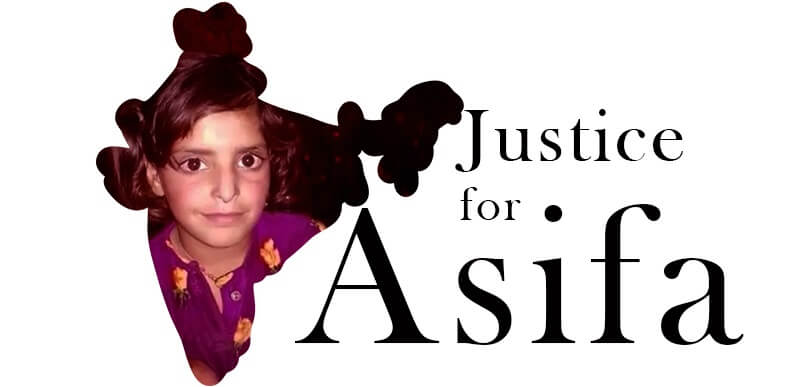
Kathua Rape Case and 'Breaking India' Forces

A large part of my news and social media feed recently has been filled with reports and opinions related to the brutal rape and murder of an 8-year old girl named Asifa Bano in India. According to the reports:
The little girl, who came from a small village in the Jammu region of  the state of Jammu & Kashmir (J&K), was abducted by some Hindu miscreants. They locked her up inside a nearby temple, and raped her several times for a week before killing her by strangulation. Her battered body was found close to the temple a week after she had gone missing.

Even if you are not an Indian, you are likely to have come across this news, because it got huge international coverage.
The New York Times tweeted (@nytimes) April 11, 2018, "In India, the rape and murder of an 8-year-old girl has led to protests by Hindu nationalists — coming to the defense of the accused.
Barkha Dutt reported in the Washington Post, "Hindu ‘nationalists’ defend accused rapists and shame India."


The case in question had actually happened in early January, so why was the national and international media reporting it only in April? This was supposedly because the "Hindu nationalists" were trying to defend the rapists.

Like most people, I too was gullible to believe these reports. Rape is anyway one of the most heinous crimes possible. But hearing about a little kid getting raped is extremely distressing. The thought that people were defending the rapists of a little kid for reasons of common religious identity was downright sickening.

Media's Falsehoods
However, as I started researching more about the incident, I found that a large part of what the media  has been airing was misleading and even factually incorrect. I won't go into the details of all those inconsistencies, but below is is a quick brief of some of the important ones.
  1. The "Hindu nationalists" who according to many media houses were "shamelessly defending the rapists" were actually demanding justice for the Asifa. In fact, in every interview that I have seen of these protesters, they always emphasized that they want the true rapists to be punished, and in the severest terms possible, irrespective of what religion they belonged to. Unfortunately, the partisan media houses continue to paint a different narrative.
  2. The "Hindu nationalists" were simply demanding that the case be transferred from the Special Investigation Team (SIT) appointed by the state government to the Central Bureau of Investigation (or CBI; this is the equivalent of FBI in USA). You can see this in the Bandh call given by the Hindu Ekta Manch in the first week of March. These "Hindu Nationalists" observed that SIT was not conducting a fair investigation, and was instead harassing all Hindus living in the vicinity, to the extent that many Hindu families had been forced to leave their villages. It certainly did not help that the SIT was also headed by a cop who had himself been accused of rape and murder in the past and had the reputation of being sympathetic to Kashmir separatists. CBI investigation has always been of much better quality than that of local police investigations, so how does demanding CBI investigation constitute to supporting rapists?
  3. According to the charge sheet filed by the SIT, the accused kept and raped the kidnapped girl in a village temple. However, as can be seen in this report, this seems impossible, because the temple was a small one-room building that was common to three different villages. That is the reason it had three doors in three different directions to allow villagers from the different villages to visit it at anytime of the day. How could a girl have been kept captive for a week in a small temple that was frequented daily by Hindus from local villages? Also, as pointed out in this video, a few meters away from where the body of the girl was found started deep forests. Why would the culprits throw the body of the girl close to the temple when they could have safely dumped the body in deeper forest?
    • For those who are not from India or are unfamiliar with Hindu traditions, it should be noted that Hindu temples aren't just visited on any one particular day of the week--as happens with Christian churches, for example. Since temples are frequented by devotees everyday of the week, it is difficult to imagine how no one noticed the poor girl if she had been locked up in this small temple. 
I stumbled on this picture while I was researching for this article. See how large parts of Kashmir (that occupied by Pakistan) have been cut off in this depiction of India's map? So have we Indians now given up our claim on POK? Picture Credit: https://www.newsbugz.com/kathua-rape-case/
Many authors have written before about the Breaking India forces that exist within certain sections of the Indian media. I too had observed the divisive reporting of of some media personalities, but I had always given them the benefit of doubt. For example, I reasoned may be these journalists were just overenthusiastic when they "inadvertently" reported on the locations of our soldiers during the Kargil War on live television, thereby endangering the lives of our soldiers. Similarly, may be the Lutyen's media was supporting the leftist JNU students' slogan of "Bharat Tere Tukde Honge (India, may you be broken into fragments)" because they genuinely believed in the freedom of speech. I even thought that they never deliberately intended to denigrate Hinduism when they started using the revered word  of Bhakt (a Hindu devotee) derogatorily. However, given the deliberately misleading way that some media houses and personalities have covered the Kathua rape case, now I have no doubt in my mind that the Breaking India and Shaming Hindu forces are real. Sadly, this partisan media is also winning, at least going by the sentiments expressed on Social Media by some of my friends. People are generally gullible, so easily fall prey to the manipulative tactics used by these media powerhouses. But more on that in the next post.

...To be continued.

Tuesday, April 3, 2018

Atrocities on the SC/ST population: What does data say?

If you are an Indian or follow Indian news, you must have seen the horrifying videos of the riots that happened in India yesterday. Thousands of rioteers armed with clubs, swords, guns and petrol bombs rampaged cities across the country, vandalizing public and private property, burning shops, cars and buses, and causing at least 9 deaths and thousands of injuries.

I think there is a tragedy even bigger than the destruction trail of the riots, and that is the polarization of the population that happens because of such events. This can be estimated from the hundreds of inane comments that we daily see on social media. So the purpose of my post is to present certain facts that should potentially help people see things in the right perspective.

The Cause of the Riots
The rioters were supposedly unhappy about a recent Supreme Court's decision that scrapped an automatic arrest provision that was there in the Scheduled Castes and Scheduled Tribes (Prevention of Atrocities) Act of 1989. I am saying "supposedly unhappy" because a large section of the rioters had absolutely no clue about what they were protesting against. When asked by TV journalists, they couldn't even identify the cause they were fighting for. Of course, that's simply because they had no cause to begin with. They were just paid goons of those political parties that have ruled the country by dividing people on the lines of caste and religion.

The Rationale Behind Supreme Court's Decision
The Supreme Court of India removed the automatic arrest provision from the SC/ST Act because it found evidence that this provision was being abused by unscrupulous individuals. In other words, it found evidence that many people were filing false cases under the SC/ST Act to harass and blackmail good citizens.

This was also not the first time that the Supreme Court took such a decision. A few years ago the Supreme Court of India had also scrapped the automatic arrest provision for dowry and domestic violence cases. It did so because it found that a large majority of these cases were false accusations made by women to blackmail their husbands into paying them large alimonies.

But What About the Atrocities on the SC/ST Population?
If you watched any of the debates on Indian television channels, you must have seen how the so called "defenders of the dalits (oppressed)" justified the violence of the riots by citing statistics about the crimes committed on the dalits. For example, you can see in this debate on Republic TV, how the dalit leader Rahul Sonpimple justifies the riots with these statements: "The government data says that every 18 minutes there is a crime against dalit. Everyday three dalit womens get raped, two murders and two house get robbed [sic]."

The statistics provided by this person were generally correct (Check here for more details), and it was also acknowledged by the anchor and the debaters from the opposite side. That still does not justify the riots, but let's also take a deeper look at those crime statistics. Do the presented crime statistics provide a complete picture? Okay, I accept that every 18 minutes a crime is committed against a dalit, but how does it compare to the crime rate of the overall population? Unfortunately, this was a question that nobody asked. So I did a quick analysis of the publicly accessible NCRB data, which was also the basis of both the Supreme Court's decision and the dalit leader's ire.

Table 1 provides information on the number of murders and rapes that occured in India in 2015 (the latest year for which data is available). Both the murder rate and rape rate for the Scheduled Castes  (SC) and Scheduled Tribes (ST) groups are significantly lower than what is for the overall population of India. 

Table 1: # of Murders and Rapes in India (2015)

# of Murder Victims
Murder Rate
# of Rape Victims
Rape Rate
Total for India
33082
2.6
34771
5.7
Scheduled Castes
729
0.4
2332
1.2
Scheduled Tribes
149
0.1
959
0.9
Note: Crime Rate is Cases Reported of Crime per 1,00,000 of population

Table 2: Population Distribution of India (Based on NCRB Data)
Population (in Lakhs)
India Population
12591.1
Scheduled Caste Population
2013.8
Scheduled Tribe Population
1042.8

To get a clearer picture, I also compared the number of murders and rapes within each groups to their respective population proportions within the country. This analysis is summarized in three pie charts that I prepared using the above data.


As can be seen in Figure 1, SC and ST combined constitute about 25% of India's population. However, as noted in Figure 2, less than 10% of rape victims are from SC and ST communities. Further, it can be seen in Figure 3 that less than 3% of murder victims are from SC and ST communities. These figures clearly show that the dalits are not greater victims of crimes, as claimed by some and believed by most people. In other words, the claim that greater amount of atrocities are being committed against the dalits is false. This is not to say that the dalits do not suffer any disadvantages. However, it is certainly not true that dalits suffer a disproportionately higher number of crimes. The data, in fact, shows the opposite. They suffer far fewer crimes than the general population. So let's not hold erroneous beliefs. And let's not allow ourselves to get swayed by people's comments without evaluating them critically.

Monday, March 13, 2017

The Psychology of Holi

Little kids are good at it, dogs are too, in fact all animals are, but most adult human beings are pretty lousy at it. Can you guess what I am talking about? I am referring to the activity of play. Play was our second nature as children. As I see in my little nieces and nephews now, there was a time in our lives when we used to squeal in delight while playing. There was a time when our parents had to literally threaten us with punishments for us stop playing and get busy with work (studies). But somehow as we grew up, we became very serious creatures and lost something that was second nature to us. Now all we do is work, work and work. We think of play as a waste of time, unless it is of a competitive nature (as in competitive sports). Play for play sake is a lost art for most adults, that ironically we need to revive by taking it seriously.

Goofing around with my niece (Year 2011)

Today is the Hindu festival of Holi--the festival of playing with colors. Many of us celebrate the festival without really understanding the significance of it. That's fine in some respects, because the beauty of such traditions is that you reap their benefits when you engage in them, irrespective of whether you actually know their psychological and spiritual significance. However, it is also true that we are likely to do things the right way and in a more committed fashion if we understand the scientific basis of our festivals. So my post today is to very briefly explain the psychological basis of Holi. The post is not just for my readers. As is usually the case, through the process of writing my posts, I also try to remind myself of the things that are truly important in life.

As most Hindus know, the Holi festival has two main parts: 1) Holika Dahan, which involves lighting a bonfire the evening before the day of playing with colors, and 2) Holi, which involves playing with colors with your family, acquaintances, and even strangers. Most Hindus will also know that the Holika Dahan bonfire tradition is related to the story of Bhakt Prahalad, and the Holi playing with color festival is related to the leelas of Radha and Krishna. The Holika Dahan story is typically referred to as a story of good over evil, but it is much more than that. To me, the story of Prahalada is also a victory of the power of innocence (depicted through Prahalada's innocent love towards Vishnu) over mindless competitiveness (depicted through Hiranyakashipu, the ambitious demon who at one point of time controlled Indrapuri). You will appreciate this interpretation, especially when you put it in context of the tradition of playing with colors the day after the Holika Dahan. Holi is the celebration of the joyful play of Krishna with Radha and the Gopis. Krishna is of course the most playful avataars of Vishnu. Holi, where people become carefree and play with colors, is again a celebration of unadulterated play that unfortunately we only see in innocent children.

There is a kind of abandonment in real play. When you are engaged in real play, you lose all self-consciousness, a mindset that most of us adults are plagued with. The times when we succeed in living our life with a complete sense of abandonment--where there are no worries about winning or losing, no worries about what others will think of us--are the happiest times of our life. Such states have been described in the psychological literature as flow or being in the zone. Naturally, we continue to strive for those moments.

Sadly, having become too serious, most of us adults cannot get over our self-consciousness without the aid of substances such as alcohol and bhaang. Bhaang, as most Indians know, is very popular during times of Holi. This is a truly a sad degradation of ourselves, where we cannot even play with abandon without the help of substances. Now, lest I be accused of preaching morality, I should say that I don't see anything immoral in use of substances. I just find them to be inefficient means of experiencing bliss, because along with the momentary bliss comes terrible hangovers. And worse they are unhealthy, addictive, and potentially dangerous for self and others (as happens during drunken driving or alcohol inebriated rapes).

The point is that we adults have a need to experience the sense of self-abandonment that we could so easily access when we were children. That's why we gravitate towards substances. However, children don't need alcohol or bhaang to experience joy and bliss. They simply play. Holi is a festival that reminds us to loosen up and play without purpose. And this is also the spiritual significance of Holi. It prompts us in the direction of taking ourselves less seriously. It leads us in the direction of Ananda, which essentially means joy/bliss and is one of the three chief characteristics of the Brahman and our real selves.

Lastly, for those who only believe in science, there is quite a bit of research that has been done on the power of play. Play has been found to make people more happy, optimistic, creative, compassionate, physically healthy, productive. It has also been found to deepen our relationships. In his book, Play: How it Shapes the Brain, Opens the Imagination, and Invigorates the Soul, author Stuart Brown shares his research on murderers, and finds that one common link among the killers was that they lacked play during their childhood. Most of us probably played a lot during our childhood days, and have only lost the art as adults. So let's take up play, so that we don't end up killing ourselves through our mindless lifestyles. There is also strong positive correlation between play and success. So, if the external manifestation of success is all you want in your life, it still makes to take play seriously.

Happy Holi!!!

Sunday, March 12, 2017

Women Empowerment in "Kong: Skull Island"

Today's post was supposed to be about the lessons that we can all learn from the numerous "mythological" stories of different Goddesses in Hinduism. I was writing the post in context of the recently concluded International Women's Day. However, as I started deliberating on the topic and writing my post, I realized that the topic is too important and complex to be relegated to one or two blog posts. So I decided to write a full-length academic article on the topic. Of course, that will take a little while to materialize, so I decided to take the relatively easier task of finding lessons related to women empowerment from a movie I watched last night: Kong: Skull Island. Yes, for better or worse, even guilty pleasures like monster movies can teach us some interesting lessons about leadership and management. We just need to be on look out for those lessons.


Now if you haven't watched the movie and are planning to watch it, don't worry, there are no major spoilers in this article. And to put things in context, here's my one-paragraph synopsis of the movie:

John Goodman plays the character of a US government official determined to collect evidence about the existence of large monster-like creatures on earth. For this purpose, he puts together a team consisting of soldiers headed by a colonel (played by Samuel Jackson), scientists, a retired special-forces guy turned tracker (played by Tom Hiddleston) and a journalist-photographer (played by Brie Larson). They set out to explore an unexplored island in the Pacific ocean called the Skull Island, where of course, King Kong lives. The rest of the movie is about the adventures and misadventures of this group on this island.

The Lessons:

1) Follow your passion, not the position: Early in the movie, we learn that the character played by Brie Larson, journalist Mason Weaver got the job of being on the expedition team perhaps because she was mistaken to be a guy from her male-sounding first name. We also learn that she forsook the job opportunity of being the cover photographer for the prestigious Time magazine so she could be on the expedition team to the Skull Island. I thought these are tidbits in the story provide important lessons related to career success and satisfaction.

When we are striving to make a name for ourselves in this competitive and sometimes unfair world, the temptation is to grab the first prestigious job that comes our way. Even people in later career stages find it difficult to let go the lure of big brand names. And this is partly understandable, because such jobs are often more lucrative than their non-glamorous counterparts. However, more name and money may not be the things that give us meaning and happiness. So if we can afford it, we should choose jobs that are going to aid in the flourishing of our passions. We might feel more successful through association to a big-brand name. However, to make a lasting difference to our professions and live a joyful life, we have to follow our passions, not positions.

2) Dress as per the demands of your work, and not based on societal expectations for your gender: One of the things I liked about Kong: Skull Island was that the female characters in the movie were all appropriately dressed. When a movie is about trekking through tropical jungles, then the women should not be wearing short and skimpy dresses with high-heels. And thankfully, Kong doesn't stoop to such objectification of women.

Now, I am not a prude. In fact, I am okay with even complete nudity in movies, as long as the scene legitimately demands it. What I am against is the typical sexual-objectification of women in movies, where you see female characters always half-naked even when they are dancing on top of snow-capped mountains (as happens often in Bollywood, though it wasn't always the case) or fighting off villains (as in Hollywood). In fact, before starting the movie, the theater showed the preview of Ghost in a Shell, a movie where Scarlett Johansson is seen jumping out of skyscrapers and killing dozens of "bad" people all the while being in flesh-colored tights that makes her appear completely nude.

The point is just this that women should dress to the demands of the occasion. You don't trek through tropical jungles and/or fight wars in clothing that makes even the models trip on flat fashion ramps. Many people in the movie business have the delusion that they are the most liberated human beings on this planet, but reality is that they are worst offenders (and perhaps promoters) of sexism and racism.

In context of the workplace, this means that women may have to resist the implicit and explicit pressures to dress in ways that continue to objectify them. Instead, they should wear clothing that is comfortable and shows that you mean business. You may ask what is the problem with objectification. It is simply this that it equates a woman’s worth with her body’s appearance and sexual functions, which in turn has lot of negative psychological consequences on women (e.g., appearance anxiety, reduced experiences of psychological flow, body shaming, lower self-awareness, and even anxiety about personal safety).

3) Avoid Workplace Hook-Ups: Another common feature in most Hollywood movies is that the male and female protagonists working together inevitably develop a romantic/sexual relationship. So I liked that the main protagonists in Kong: Skull Island did not end up sleep with each other or develop a love affair.

You may ask what's wrong with love affairs? Aren't they natural part of human life? Yes, love and sex are natural parts of life? When we spend large amounts of time together at work, it is indeed natural that some romantic relationships may develop. However, movies tend to glamorize workplace romances, whereas the reality of workplace romances is that they are complicated and often create some major problems, especially for women. Studies show that people engaged in romantic relationships are often perceived as less credible and trustworthy, and such perceptions are especially harsher against women. Sure studies also report some advantages of workplace romances (e.g., dating somebody at work may be safer than trying to look for romantic interests at bars and clubs), but workplace crushes and romances--especially when extra-marital or between people of unequal power--can have lead to accusations of ethical breaches, favoritism and sexual harassment, and can literally spell disaster for the workplace.

Wednesday, February 8, 2017

The use and misuse of "creative license" in movies

Today's post is a continuation of the discussion that I started on the incident of filmmaker Sanjay Leela Bhansali being slapped by some members of the Shri Rajput Karni Sena for the suspected inappropriate portrayal of Rani Padmini in his upcoming film Padmavati. While the last post focused on the question of whether that incident could be consider terrorism, today's post attempts to explore the limits of artistic license. More specifically, I share my thoughts on what forms of artistic license are appropriate and not appropriate.

Artists have high levels of artistic license when they are working on projects that are completely fictional. For example, no one cares much if the hero in a fictional movie defies all laws of gravity and common sense. Artistic license helps bring interesting variety to characters. For example, aliens in movies have been conceptualized in wide variety of forms from tripods to octapods to shape shifting creatures and machines. They have been conceptualized from being malevolent to completely benign. They have been thought of as super-intelligent creatures to ones with more like reptilian-brains. The point is that all of these different forms of aliens are valid, because after all they are products of creative imagination and have no basis in reality. It is only when a certain filmmaker starts adding elements into the aliens that have parallels in reality that the ethics of artistic license comes to play. Let's take a hypothetical example of a Sci-Fi filmmaker who always depicts his his malevolent aliens as black in color and his benign aliens in lighter shades. Let's also say that his malevolent aliens always (or mostly) speak with African-American accents while his good aliens always (or mostly) speak with English accents. This would make us suspect that our Sci-Fi filmmaker is a racist. We would then say that the filmmaker is mis-utilizing the creative freedom given to artists. The filmmaker may still get away with it from a legal point of view, but would still be considered a racist.

Now things become more complicated for projects that are based on historical or real-life cases. My friends know that I am fond of such movies. That of course, doesn't meant that such movies get their facts right. In fact, almost all such movies get something or the other wrong. But that is not necessarily a bad thing, because movie makers often have to take some creative liberties to fit complex events into the format of a 2-hour feature film. For example, in the recent movie Patriots Day, the character of Sgt. Tommy Saunders played by Mark Wahlberg wasn't a real person but a composite of several police officers who had immediately responded to or investigated the bombings that happened at the Boston Marathon of 2013. You overlook such inaccuracies in the movie because you understand that such artistic liberties need to be taken to simplify a complicated investigation process. Peter Berg, the director of Patriots Day, was still criticized for not crediting a brave Black cop named Dennis 'DJ' Simmonds who suffered brain injury when one of the terrorists hurled a bomb towards him; DJ died a year later, and his death was linked to the injuries he had suffered during the blast.

The point is that artists can take less creative liberties when it comes to projects that they claim to be based on real historical cases. Again, it does not mean that they cannot take any creative liberties, but that their choices will be evaluated with more critical lenses. For example, the movie 300 which was based on the "historically inspired" comic book by the same name had many factual inaccuracies. Frank Miller, the creator of the comic said this about some these inaccuracies:

The inaccuracies, almost all of them, are intentional. I took those chest plates and leather skirts off of them for a reason. I wanted these guys to move and I wanted ’em to look good. I knocked their helmets off a fair amount, partly so you can recognize who the characters are. Spartans, in full regalia, were almost indistinguishable except at a very close angle. Another liberty I took was, they all had plumes, but I only gave a plume to Leonidas, to make him stand out and identify him as a king.

I think any reasonable person wouldn't mind these inaccuracies. However, some of the other "creative liberties" taken by the makers of 300 generated valid criticism. For example, some historians criticized that the Spartans were actually a slave-owning society, although they were projected as a culture that valued freedom the most. Similarly, the Persians are shown as an "incarnation of every Orientalist stereotype imaginable: decadent, oversexed, craven, weak, spineless," which naturally wasn't taken positively by people from Iran.

Coming back to the case of Bhansali's Padmavati, I don't know the kind of artistic liberties that he has taken, simply becauAse I haven't read his script. But given Bhansali's history with mangling historical facts, is it not natural for the Rajasthanis and all Indians to be apprehensive about the way their beloved legends have been depicted in the movie? By the way, before I proceed further, I must say that I have loved many of Bhansali's movies. I think some of his initial movies, such as Khamoshi: The Musical and Hum Dil De Chuke Sanam. I never saw Devdas, primarily because I am not fond of the idea of glorifying a depressed drunkard. I did watch Black, a movie that was praised to the skies because of its novelty and sensitive portrayal of different forms of disability. But frankly I was heavily disappointed by Black, not because it was a badly made film--it was actually very well made--but I abhor it when filmmakers plagiarize a movie and don't give credit to their source of "inspiration." I had seen and loved the 1962 Oscar-winning movie, The Miracle Worker, from which Black had been copied (including frame-by-frame reproduction of some scenes), so couldn't appreciate what was touted as an "original" movie.

People--including many of my friends--went gaga over Bhansali's last movie Bajirao Mastani, but I hated the fact that Bhansali reduced the story of the great warrior Bajirao I to that of a lunatic love story. Bajirao I, the man who challenged the reign of Mughals and never lost a single battle in his military career of 20 years, was shown dying a depressed and delirious lover. The warrior whom the British Army Field Marshal, Bernard Montgomery, had described as "possibly the finest cavalry general ever produced by India" was shown to be a man who easily gave up his fight against the "discriminations" that he received within his own society for having taken a second wife who happened to be partly Muslim. Instead of celebrating the Hindu culture that helped let a Brahmin (priest) emerge into the role of a Kshatriya (warrior), the movie took a lot of pains to show the Marathi culture of the 1700s in poor light. The mother of the great Peshwa was shown as an evil person who was ready to sacrifice her own son for the pride of her Hindu-Maratha culture. By the way, I am not claiming that the Hindu and Marathi culture of those times were all perfect, but I would have appreciated it if Bhansali had at least put in a little effort to highlight the reasons behind the Maratha's antagonism towards the Muslims. The Marathas after all had been the strongest resistors of the Mughals for over a century. It is well known that the Mughals, especially during the reign of Aurangzeb, had not only demolished countless temples but had also committed immense atrocities on the Hindus and Sikhs of India, literally killing, raping and forcibly converting millions of the population.

In summary, I have two points with respect to artistic liberties. First, artistic or creative license is not a license to falsify facts and depict historical characters and cultures based on our own whims and fancies. Second, creative license is not the same as not having any responsibilities towards one's society.  For example, creative license does not mean we should be including an item number (that objectify women) in all our movies just to titillate the audience. Hollywood makes tons of movies based on real life but almost all of them celebrate the inherent goodness of the American society and the American military. America is always saving the world in Hollywood, be it in works of pure fiction or movies based on some real incidents. Yet, in India, filmmakers seem to take immense pride in showing only the dark sides of the country. Again, I am not saying that India doesn't have any dark side or that those dark sides should not be shown, but no society becomes great by only pointing out faults in it. For a society to become great, you have to celebrate it, and you have to take pride in it. If filmmakers want to become instrumental in the building of a great India, they should make at least one positive film on India for every negative film that they make. Always pooh-poohing the society may make you appear liberal and cool, but you effectively do a great disservice to the society. To be fair, Bhansali is not the greatest offenders of the misuse of creative license--in fact, his offenses are pretty tame in comparison to others--but I hope and wish that the quality filmmakers of India also make historical movies that fill the people with a sense of pride about being Indian.

I will end this post with a recent video by poet-turned-politician Dr. Kumar Vishwas where he recites a poem by Pt. Narendra Mishra on Rani Padmini. The spirit that this poem evokes should be what the filmmakers of India should aspire to evoke in their movies. Jai Hind!


Disclaimer: Although I shared the video of Kumar Vishwas here, I am not a supporter of Aam Aadmi Party. Rather I am very critical of it, especially its leader, Mr. Arvind Kejriwal.

P.S.: Please share your thoughts on the ideas expressed in the article in the comments section below. Thank you!

Wednesday, July 6, 2016

3 Happiness Lessons from the Rath Yatra


Today was Ratha Yatra, a Hindu festival originating from my state of Odisha that celebrates the journey that the main deities of Puri Jagannath temple—Jagannath, Balabhadra, Subhadra and Sudarshana—undertake every year. Also known as the Car Festival or the Chariot Festival, the festival is now observed across all major cities of the world.

For those who are unfamiliar with the Ratha Yatra of Lord Jagannath, you must have used or at least heard of the English word 'juggernaut' which refers to any huge, powerful and overwhelming force. This term came about when the British witnessed the Ratha Yatra for the first time in the 18th century and were completely awed by the size and grandness of the chariots being pulled by what often seems like an ocean of people.

There are many beautiful mythological and historical stories associated with Puri's Ratha Yatra, but I won't touch upon them in this article. Instead, I would like to highlight three psycho-spiritual lessons we can all take from this festival. As I have been researching and reflecting on different evidence-based approaches for wellbeing, I am amazed at how much wisdom lies behind many Hindu festivals and how we can literally transform our lives if we celebrate these festivals a little more mindfully.

1) Develop of a strong and healthy body: You may be wondering, “What does the Ratha Yatra have to do with a strong body?” No, I am not referring to the physical strength you would need to pull the ropes of the ratha, although that would certainly be very helpful. The importance of a strong and healthy body can be understood if we read the Katha Upanishad, which describes ratha (Sanskrit for a chariot) to be symbolic of the physical body. So the ratha yatra that we celebrate every year is essentially symbolic of our life's journey (yatra is a Sanskrit word for journey). We all want our life's journey to be a happy one. Does the ratha yatra give us any hints about how we can achieve this objective? Yes, have a strong and healthy body. According to yogic literature, the biggest impediment to happiness is a sick body. So it is very important to develop a strong and healthy body, the exact same way that so much of attention is paid every year to building strong rathas (chariots). Diseased and weak rathas (and bodies) cannot withstand the stress of the ratha yatra (life's journey).

2) Do not identify with the body: While a strong and healthy body helps us live a happy life, it is also important to remember that we are not our body. Again, according to Katha Upanishad, our true self is the Atma (pure consciousness) and the body is just the ratha (or the vehicle) that the Atma uses to complete the journey of life. This aspect is sometimes described through the quote, "We are not physical beings having spiritual experiences. We are spiritual beings having physical experiences." The ephemeral nature of our bodies is beautifully represented in the cyclical nature of the ratha yatra: each year new rathas carry the deities from the Jagannath Temple to the Gundicha Temple and back, after which the rathas are discarded. Our life's journey is similarly cyclical, where we take up a physical body in one life, then discard it at the time of death, before moving on to another body for another cycle of life. Now the philosophical implications of this cyclical nature of life is enormous that is beyond the scope of this blog post, but from a very practical point of view, it means that most of our suffering is caused because we identify too strongly with our body. It is no wonder then that the most powerful meditation techniques (in terms of their efficacy on mental wellbeing) are all geared towards creating a distance between our self and our body. If you do not know how to meditate, it is worth your time to learn it, since it has been consistently shown across numerous research studies to have a positive impact on your wellbeing. 

3) Overcome distractions: There has been a lot that has been published about how our mental distractions impair our ability to be happy and successful in our lives. This insight is also beautifully illustrated through the festival of ratha yatra. Traditionally chariots got their power from horses. In Katha Upanishad, these horses symbolize our indriyas (or sense organs) through which we relate to the external world. The sense organs are the physiological basis through which we experience pleasure and pain. Correspondingly our sense organs become the driving force of our life. We live to keep them satisfied and free from pain. We get immediately distracted by anything that excites our senses. However, the problem with this approach of living (called hedonistic approach) is that we become literal slaves to our sense organs. Our lives become not very different from the life of an addict who compulsively craves and consumes substances but is still miserable. Also, how can you do a successful journey when you are distracted in all possible directions? The key is for the charioteer (symbolic of buddhi, or discriminatory intelligence) to take control of the reins (symbolic of our mind) and not let the horses (or in case of the Ratha Yatra, the devotees) pull in all possible directions. It is only then that the passenger (Atma) can reach his destination. In practical terms, the key to happiness then is not in repressing our desires, as is recommended in some religions. Desires after all are the life force that help us move forward with our life. But it means that we stay mindful and in control of our desires so that we do not get easily distracted by the countless meaningless attractions and move forward in the direction dictated by your buddhi. In neurological terms, this would be called training the pre-frontal cortex to take control over the lymbic system, again something that is achieved through meditation and mindfulness living.